
Reviewed for accuracy by Angelo Quatrano, CIEC, Senior Indoor Environmental Consultant.
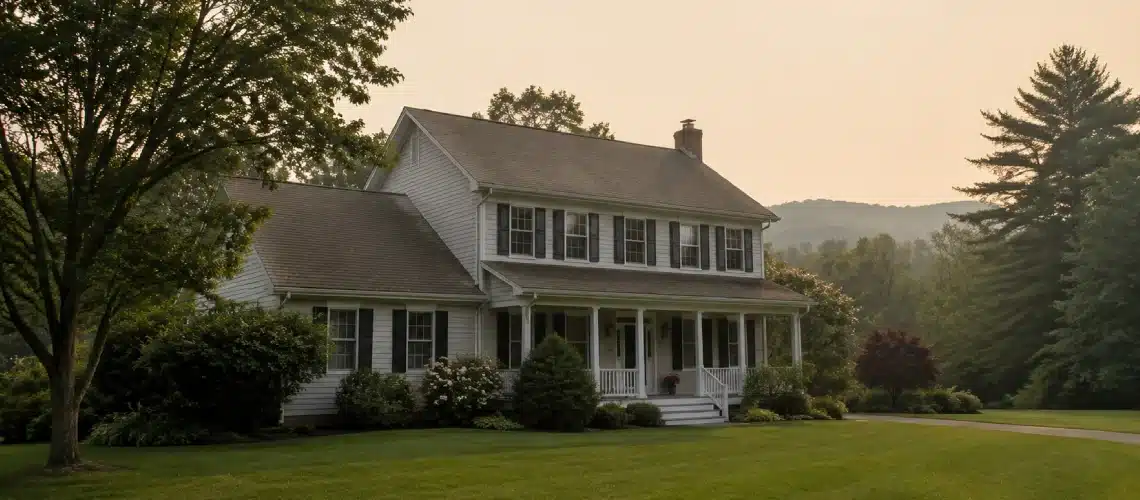
You woke up and the sky looked wrong. A faint haze hangs over the yard. The air outside smells like something burning, even though nothing near you is on fire. You checked the news and learned smoke from a wildfire, sometimes hundreds of miles away, has drifted into your region.
You closed the windows. You told everyone to stay inside. Then you noticed the air in the house does not feel quite right either. A faint smoky smell near the front door. A little more dust than usual on the coffee table. One room feels stale.
Not every smoke event means your indoor air needs testing. But staying inside does not automatically mean indoor air is unaffected. This article explains what to monitor and when professional testing may be worth considering.
Quick Answer
Outdoor wildfire smoke can enter a home through doors, small building gaps, ventilation openings, and HVAC operation, even when windows are closed. Monitoring your indoor conditions is often reasonable when odor and haze disappear as outdoor air improves. Testing may be worth considering when smoke odor lingers, unusual dust remains, or one room continues to feel different after outdoor conditions normalize.
How Outdoor Smoke May Enter a Home
Homes are not sealed boxes. Even a well-built home has small openings that allow air exchange with the outside. Wildfire smoke can contain fine particulate matter, including PM2.5, and some of that outdoor air may enter a home during a regional smoke event. The amount that reaches indoor air varies by the event, the building, and how the home is operated.
Doors and windows. Repeatedly opening exterior doors during the day introduces outdoor air in small bursts. Poorly weather-sealed windows can allow gradual air exchange even when closed.
Small building gaps. Homes typically have small gaps around utility penetrations, attic hatches, older window frames, and rim joists. These gaps allow slow, ongoing air movement between inside and outside.
Ventilation and air-exchange systems. Bathroom fans, kitchen range hoods, and dryers exhaust indoor air. Replacement air then enters through other pathways. During a regional smoke event, that incoming outdoor air may contain smoke-related particles depending on outdoor conditions and the building.
HVAC operation. Some HVAC systems pull in a portion of outdoor air by design. Others may draw air through small duct leaks in unconditioned spaces. The effect varies from home to home. It is not automatic, and it is not universal.
Traffic in and out. Every time someone opens the door to bring in groceries, walk the dog, or check the mail, a small amount of outdoor air enters the home.
None of these mean your indoor air is heavily affected. They mean the possibility exists, and the level depends on the home, the duration of the smoke event, and the practices during it.
What Homeowners May Notice
During or after a regional smoke event, some homeowners notice changes in their home. Others notice nothing. Observations that may be worth paying attention to include:
A faint smoky odor indoors, especially near entry points. A hazy quality to the light inside the home. More settled dust than usual on flat surfaces. One room feeling different or staler than others. Indoor air that feels heavy or uncomfortable without an obvious reason. Smoke odor that returns or intensifies when the HVAC system runs.
These are observations, not diagnoses. They do not confirm what is in your air or at what level. They are signals worth tracking.
When Monitoring May Be Reasonable
Monitoring means watching how conditions change over time without immediately calling for testing. This is often the right first step. Monitoring may be reasonable when:
Outdoor air quality improves and the outdoor smoke event ends. Any indoor smoke odor fades within a day or two. No unusual dust or haze remains. All rooms return to feeling normal. The issue does not return during the following days. No other indoor moisture, mold, or air quality concern is already known.
Monitoring is low-cost, low-effort, and often sufficient for short, resolved smoke events. What monitoring cannot do is confirm specific pollutant levels inside your home. It tells you how things feel and look, not what is measurably present.
When Testing May Be Worth Considering
Some situations warrant more than monitoring. Testing may be worth considering when:
Smoke odor persists indoors after outdoor conditions clearly improve. Unusual dust or particle-related concerns remain in one or more rooms. If settled dust itself remains a concern, Evergreen’s dust testing services may provide additional information about dust contaminants and particulate matter. One area of the home continues to feel different from the rest. Smoke odor returns or intensifies whenever the HVAC system operates. The concern affects rooms that are occupied for extended periods. You want measurable information about your indoor conditions rather than a subjective read.
Testing does not answer every question about a smoke event, but it can provide measurable information where observation cannot. Testing does not automatically establish that a measured indoor condition was caused specifically by wildfire smoke; what can be identified depends on the testing method and scope used. For broader guidance on the decision itself, see when to test indoor air quality in Maine and New Hampshire.
What Testing Can Clarify
Indoor air quality testing evaluates the areas that are sampled. Depending on the scope, it may clarify:
Conditions in the specific rooms or areas tested. How indoor conditions compare to outdoor conditions where applicable. Whether one room shows different results than another, which can support decisions about targeted follow-up. Whether findings suggest additional HVAC, building envelope, or environmental investigation may be appropriate.
Just as important, understand what testing cannot do. It cannot identify every particle source in your home. It cannot evaluate every concealed space (inside walls, inside ductwork, behind insulation). It does not replace official outdoor air quality alerts from state or federal agencies, nor does it replace an HVAC inspection or building envelope investigation when the concern may be related to those systems.
If one room feels different from the rest of the home, targeted sampling in that area may help clarify whether the difference reflects a broader indoor pattern or a localized condition.
How Evergreen Can Help
Evergreen Air Quality Services provides independent indoor air quality testing for homes across Maine and New Hampshire.
We test only. No remediation. No cleanup. No upsell.
Evergreen separates testing from remediation, cleanup, and HVAC services. Because Evergreen provides testing and reporting only, homeowners can evaluate the findings independently before deciding whether any additional professional investigation is appropriate.
Testing scope, sample collection, laboratory analysis, and reporting time depend on the property and the assessment performed. Mold sample results typically return within 24 to 48 hours; other analyses may require more time depending on the test performed.
Frequently Asked Questions
01. Can wildfire smoke enter a closed home?
Yes. Even with windows and doors closed, smoke-related air can enter through small building gaps, ventilation openings, HVAC operation, and normal door traffic. The amount varies by home construction, duration of the event, and daily habits during the smoke event.
02. Does every wildfire-smoke event require indoor-air testing?
No. Many smoke events are short and resolve without lasting indoor effects. Monitoring is often reasonable when odor and haze fade as outdoor conditions improve. Testing is more appropriate when concerns persist after outdoor air clears.
03. What should I monitor inside my home during a smoke event?
Watch for smoke odor indoors, hazy indoor air, unusual settled dust, and rooms that feel different than others. Also note whether HVAC operation changes how the air smells or feels. Keep track of how quickly conditions normalize once outdoor air improves.
04. Can an HVAC system circulate smoke-related particles?
It may. Some systems draw a portion of outdoor air by design, and duct leaks in unconditioned spaces can also pull in outside air. The effect depends on the specific system, the ductwork condition, and how the system is operated during the event.
05. Does a smoke odor confirm unsafe indoor-air conditions?
No. Odor is a signal that something is present, but it does not measure concentration, particle size, or health impact. Odor alone cannot confirm whether indoor conditions are unsafe. Measurable data comes from testing, not from smell.
06. What can indoor-air testing clarify after a smoke event?
Testing evaluates conditions in the areas sampled. It can support indoor and outdoor comparisons, show differences between rooms, and indicate whether further HVAC or building investigation may be appropriate. It does not identify every particle source or evaluate concealed areas.
07. How long do laboratory results take?
Turnaround depends on the testing scope and analysis. Mold sample results typically return within 24 to 48 hours, while bacteria and some other analyses may take about one week. Evergreen can confirm the expected timeframe for the specific assessment when scheduling.
Schedule Indoor Air Quality Testing in Maine & New Hampshire
If smoke odor, unusual dust, or room-level differences remain after outdoor conditions improve, testing may help provide measurable information about the indoor areas evaluated.
Call (207) 310-7733 or book online.
About the Reviewer
Angelo Quatrano is a Certified Indoor Environmental Consultant serving Maine and New Hampshire. Angelo specializes in indoor air quality testing, mold-related conditions, asbestos inspection and testing, and environmental analysis for residential and commercial properties. His work focuses on independent testing and reporting without remediation or cleanup services.
