
Reviewed for accuracy by Angelo Quatrano, CIEC.
You noticed something in the first-floor bedroom. A faint musty odor that comes and goes. You checked around the baseboards. Nothing looks wrong. The humidity in that room reads a little higher than the rest of the house. Then you remembered the crawlspace access panel near the utility room, and how you have not looked down there in years.
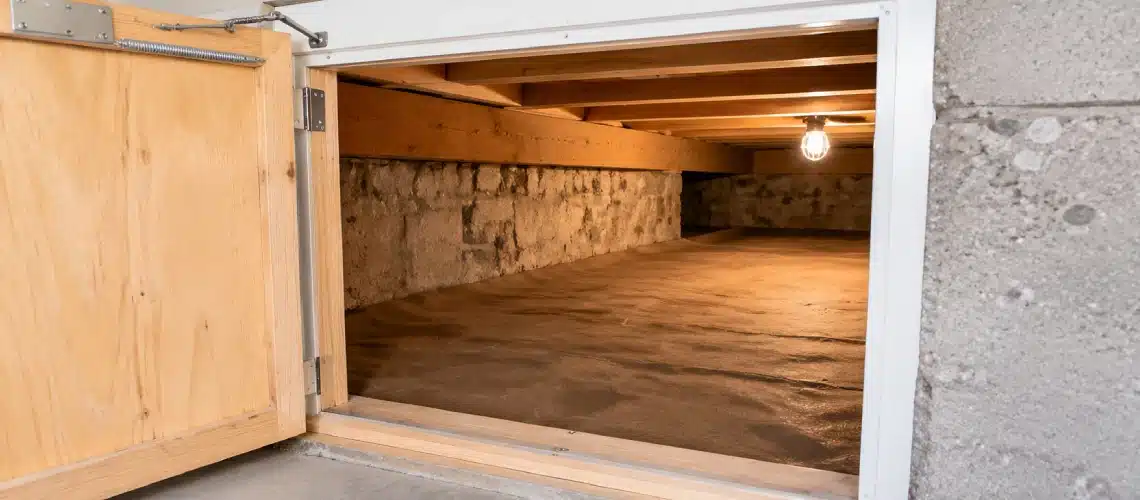
Crawlspaces are one of the most overlooked parts of a New England home. They are dark, cramped, and easy to forget. When conditions down there change, the homeowner is often the last to know.
A damp crawlspace does not automatically mean your indoor air is unhealthy. It also does not mean your home has mold. What it does mean is that a hidden space beneath your living areas may be influencing the air in the rooms above it, and understanding that connection is the first step to deciding whether monitoring or testing makes sense.
Quick Answer
Crawlspace moisture may influence nearby occupied areas through air movement and building openings, but not every damp crawlspace creates an indoor air problem. Monitoring may be reasonable when the space dries normally and no indoor changes persist. Testing may be worth considering when odor, elevated humidity, or room-level differences continue in the rooms above the crawlspace.
Why Crawlspace Conditions Are Easy to Miss
Crawlspaces are the easiest part of a home to ignore. Most homeowners rarely enter them, and when they do, it is for a specific plumbing or electrical reason, not to check overall conditions.
Several factors combine to keep crawlspace issues hidden:
- Limited visibility: Access panels are small, lighting is poor, and physical entry is uncomfortable. Casual inspection is rare.
- Infrequent inspection: Many homeowners have not looked at their crawlspace in years, sometimes not since the home was purchased.
- Ventilation conditions: Crawlspace air exchange varies by construction. Some crawlspaces have limited air exchange, while others are vented or conditioned. Moisture behavior depends on crawlspace design, outdoor conditions, ground moisture, and how the space connects to the home.
- Plumbing or drainage concerns: Slow leaks from plumbing, condensation on cold pipes, or drainage problems near the foundation can introduce moisture that goes unnoticed for extended periods.
- Ground moisture: Bare soil can release water vapor into crawlspace air. Without an effective ground vapor barrier, this can contribute to elevated crawlspace humidity. EPA guidance on crawl spaces and moisture explains how crawlspace moisture can enter from the ground and move into other parts of a building.
- Seasonal humidity: Warm, humid summer air entering a cooler crawlspace can condense on cold surfaces, similar to the way condensation forms on a cold drink glass. This is a well-known pattern in northern climate homes.
- Insulation and air-sealing conditions: Older or displaced insulation may hold or hide moisture, and openings around penetrations can affect how crawlspace air interacts with occupied areas.
None of these conditions proves that occupied indoor air is affected. They explain why crawlspace moisture can remain unnoticed until changes become noticeable elsewhere in the home.
How Crawlspace Conditions May Influence Occupied Areas
Air moves through homes because of pressure differences and openings between building areas. Crawlspace air can move into occupied areas through plumbing penetrations, utility chases, subfloor gaps, and access panels. How much influence the crawlspace has depends on the home’s construction, air sealing, pressure relationships, and other conditions.
Odor from the crawlspace may be noticed near lower floors, especially near closets, laundry rooms, or first-floor bathrooms. Humidity differences may show up as one room feeling heavier or damper than the rest of the house. Nearby rooms may feel different for reasons the homeowner cannot immediately identify.
The extent of influence varies by property. Air sealing, insulation, foundation type, mechanical systems, and the size and location of openings between the crawlspace and occupied areas can all affect the connection. Two homes on the same street can behave very differently.
Signs the Concern May Extend Beyond the Crawlspace
Some signs suggest that crawlspace conditions may be worth comparing with occupied indoor areas. Watch for:
– Recurring musty odor in the rooms directly above the crawlspace.
– Odor that is stronger near floor penetrations, utility chases, or first-floor closets.
– Elevated humidity in lower rooms compared to upper floors.
– One room repeatedly feeling different from the rest of the home.
– Visible dampness, condensation, or standing moisture in the crawlspace itself.
– Concerns that intensify after plumbing events, drainage issues, or heavy rain.
– Odor that returns after temporarily drying the space with a fan or dehumidifier.
If one room feels stuffier than the rest and it is above or near a crawlspace, the two observations may be worth comparing.
Why This Matters in Maine and New Hampshire
Regional context makes crawlspace conditions especially worth understanding here.
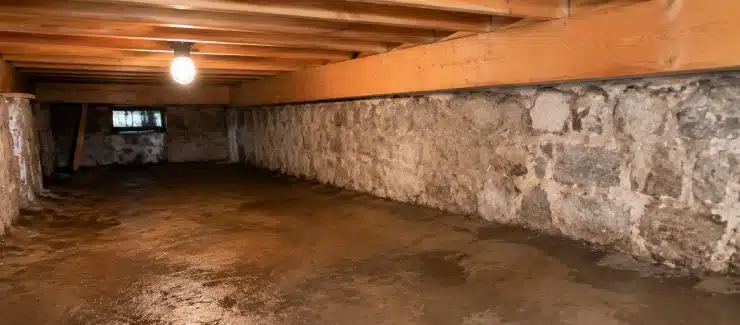
Maine and New Hampshire include many older homes with crawlspaces, stone foundations, additions, and mixed foundation configurations. These properties can behave differently from newer construction because air pathways, ground-moisture control, insulation, and drainage conditions vary widely from one home to another.
Seasonal humidity changes across Maine and New Hampshire can affect crawlspaces, especially during warm, humid weather when cooler below-grade surfaces may encourage condensation. Older stone or rubble foundations may have different moisture pathways than newer foundation systems, particularly where drainage, ground-water control, or vapor barriers are limited. Homes with mixed foundations—such as partial crawlspace, partial basement, or later additions—can also show uneven moisture patterns from one area to another. For a related lower-level seasonal pattern, see why a musty basement smell can worsen in summer.
These regional factors do not guarantee any particular home has a problem. They explain why the possibility deserves attention when signs appear.
When Monitoring May Be Reasonable
Monitoring is often the right first step. It is low-cost, low-effort, and provides useful information over time. Monitoring may be reasonable when:
Dampness in the crawlspace was clearly temporary and tied to a known event. The space dries normally within a reasonable time. No odor persists in the occupied rooms. Indoor humidity in the rooms above returns toward its usual pattern for the home. The concern does not recur across weeks or seasons. No staining, material damage, or visible growth appears.
What monitoring cannot do is confirm that no hidden condition exists. It observes signs over time; it does not measure the underlying environment. When those signs fade and stay away, continued monitoring may be reasonable.
When Testing May Be Worth Considering
Some situations call for measurable information. Testing may be worth considering when:
- Crawlspace odor persists after obvious moisture sources have been addressed.
- Indoor odor continues near lower rooms even when the crawlspace looks better.
- Elevated humidity in the rooms above remains steady and does not resolve.
- One room repeatedly feels different, and it happens to be near the crawlspace.
- There is a known history of moisture beneath the home.
- Crawlspace dampness returns after storms or seasonal humidity events.
- There is uncertainty about whether crawlspace conditions are associated with changes in occupied areas.
Whole-Home Assessment Versus Targeted Sampling
Not every situation calls for the same scope. Two general approaches exist.
Whole-home assessment evaluates the broader pattern across the home, including comparisons between rooms, outdoor baseline where appropriate, and multiple sampling locations. This approach makes sense when concerns appear in multiple rooms or when the homeowner wants a comprehensive picture.
Targeted sampling focuses on the crawlspace-adjacent room or the specific area of strongest concern. This approach may make sense when the issue appears localized and the homeowner wants measurable information about that area.
Neither approach proves conditions throughout the entire home from a single sample. The right approach depends on the building layout, the pattern of concern, and what decisions the homeowner needs to make afterward.
What Testing Can Clarify
Mold testing evaluates mold-related conditions using air or surface sampling when appropriate. Indoor air quality testing can evaluate broader environmental conditions based on the testing scope. If you are unsure how the two differ, see indoor air quality vs mold testing in Maine and New Hampshire. Testing may be worth considering when:
- Crawlspace odor persists after obvious moisture sources have been addressed.
- Indoor odor continues near lower rooms even when the crawlspace looks better.
- Elevated humidity in the rooms above remains steady and does not resolve.
- One room repeatedly feels different, and it happens to be near the crawlspace.
- There is a known history of moisture beneath the home.
- Crawlspace dampness returns after storms or seasonal humidity events.
- There is uncertainty about whether crawlspace conditions are associated with changes in occupied areas.
Just as important, understand what testing cannot do. It may not locate the exact source of a concern. It does not evaluate every concealed space between wall cavities and structural framing. It does not replace crawlspace repair, drainage correction, plumbing investigation, or structural evaluation.
When Another Professional May Be Needed
Testing identifies conditions; it does not correct the moisture source.
Depending on the findings, a plumber, drainage or foundation professional, or another appropriate contractor may need to investigate or correct the underlying condition. Evergreen does not perform that corrective work.
How Evergreen Can Help
Evergreen Air Quality Services provides independent indoor air quality testing and mold testing for homes across Maine and New Hampshire.
We test only. No remediation. No cleanup. No upsell.
Evergreen provides testing and reporting without selling crawlspace repair, encapsulation, waterproofing, remediation, or HVAC services. This separation keeps the testing process focused on the conditions evaluated rather than on selling corrective work. If findings do not support further investigation, the report can say so.
Samples are submitted for laboratory analysis, and standard sample results are typically available within 24 to 48 hours, although turnaround can vary by test type, laboratory processing, and scope.
Frequently Asked Questions
01. Can crawlspace air affect the rooms above it?
Yes, it can. Crawlspace air may move into occupied areas through subfloor openings, utility penetrations, and access panels. The extent of influence varies by home construction, air sealing, pressure relationships, and other conditions.
02. Does a damp crawlspace always mean mold is present?
No. Damp conditions can support mold growth, but dampness alone does not confirm that mold is present. When odor, moisture, or indoor-air concerns persist, appropriate testing may provide additional information.
03. What are signs crawlspace conditions may be affecting indoor air?
Recurring musty odor in rooms above the crawlspace, odor near floor or utility penetrations, elevated humidity in lower rooms, and one room repeatedly feeling different than the rest of the home are common signs. Persistence over time is more meaningful than a single observation.
04. Should the whole home be assessed or only the crawlspace area?
It depends. A whole-home assessment makes sense when concerns span multiple rooms. Targeted sampling near the crawlspace or the strongest area of concern makes sense when the issue appears localized. The scope should match the pattern of concern.
05. Can a dehumidifier solve a crawlspace moisture concern?
Sometimes it helps. A dehumidifier reduces humidity, but it does not address the underlying source of moisture. If moisture continues to enter the space, the dehumidifier is treating a symptom. Identifying the source usually requires investigation beyond dehumidification alone.
06. Does Evergreen repair or encapsulate crawlspaces?
No. Evergreen provides testing and reporting only. We do not perform crawlspace repair, encapsulation, waterproofing, remediation, or HVAC work. If findings indicate that corrective work is warranted, the homeowner selects the appropriate contractor independently.
07. How long do laboratory results take?
Standard sample results are typically available within 24 to 48 hours, although turnaround can vary based on the specific test type, laboratory processing, and scope.
Schedule Mold or Indoor Air Quality Testing for a Crawlspace Concern
If a damp crawlspace is accompanied by recurring indoor odor, elevated humidity, or room-level differences, testing may help evaluate conditions in the affected areas. Evergreen serves homes across Maine and New Hampshire.
Call (207) 310-7733 or book online.
About the Reviewer
Angelo Quatrano is a Certified Indoor Environmental Consultant serving Maine and New Hampshire. Angelo specializes in indoor air quality testing, mold-related conditions, asbestos inspection and testing, and environmental analysis for residential and commercial properties. His work focuses on independent testing and reporting without remediation or cleanup services.
