
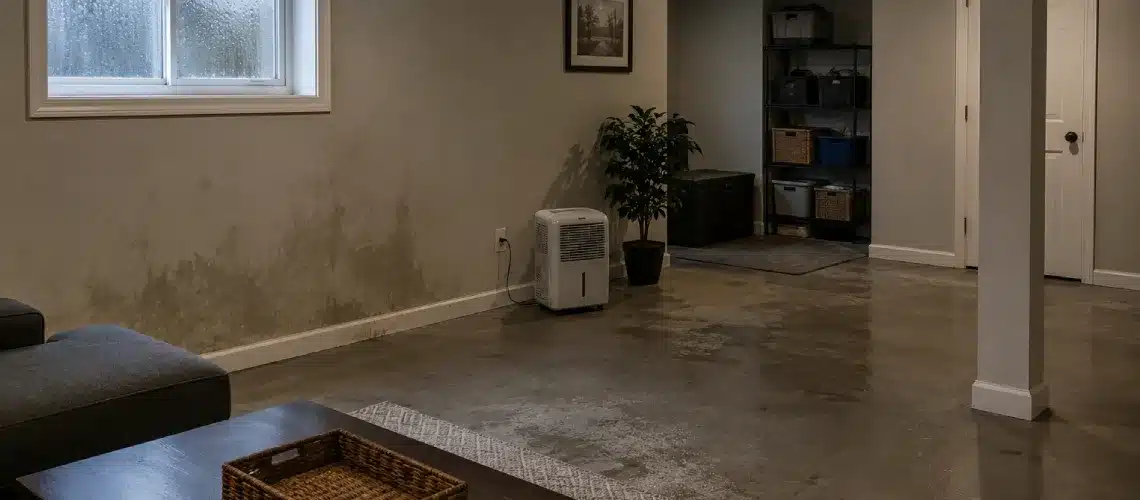
After winter, many homes in Maine and New Hampshire begin to feel different, especially in basements and lower-level spaces.
The air may feel damp, slightly heavier, or inconsistent from one room to another. You might notice a faint odor that comes and goes, but nothing is clearly visible.
There are no obvious signs of damage, yet the indoor environment does not feel the same as it did before.
This is where most homeowners get stuck. The problem is noticeable, but not visible. The air feels off, but there is no clear explanation.
At this stage, the most important decision is not whether something is wrong, but which type of testing will correctly identify what is happening.
Choosing between indoor air quality testing and mold testing determines whether you get clarity or continue guessing.
Indoor Air Quality Testing vs Mold Testing
Indoor air quality testing evaluates overall environmental conditions within a home, while mold testing specifically identifies the presence of airborne mold spores to confirm mold-related activity.
Quick Answers
What is the difference between IAQ and mold testing?
IAQ testing evaluates overall indoor air conditions, while mold testing confirms whether mold spores are present.
When should I start with IAQ testing?
When indoor air feels off, inconsistent, or unclear without a visible cause.
When should I choose mold testing?
When there are clear indicators such as visible mold or persistent musty odor.
Can both tests be needed?
Yes. In some situations, both are required to fully understand indoor conditions.
What Do Indoor Air Quality Testing and Mold Testing Evaluate?
Indoor air quality testing evaluates overall indoor conditions, while mold testing focuses specifically on confirming whether mold is present.
Key Difference Between IAQ Testing and Mold Testing
Indoor Air Quality Testing
Indoor air quality testing is usually the broader starting point when the cause of indoor discomfort is unclear.
It is used when a home feels damp, inconsistent, or uncomfortable, but there are no obvious signs of mold or visible damage.
Mold Testing
Mold testing is more specific.
It is used when there are stronger indicators that mold may be present, such as visible growth, a persistent musty odor, or known moisture damage.
The key difference is purpose. Indoor air quality testing helps evaluate unclear indoor conditions, while mold testing helps confirm suspected mold. Indoor air quality testing helps evaluate unclear indoor conditions, while mold testing helps confirm a suspected mold concern.
When You Need Indoor Air Quality Testing
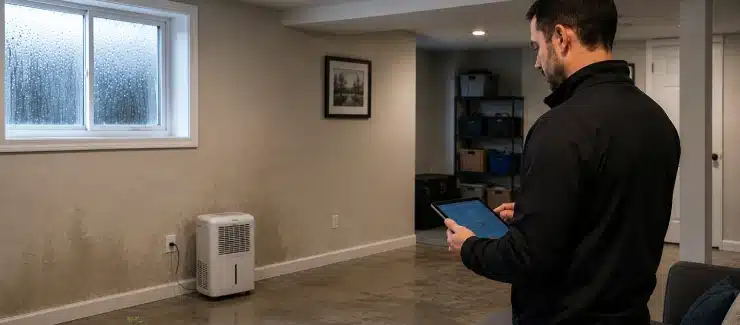
Indoor air quality testing is the correct starting point when the issue is not clearly defined.
This applies when:
-
Air feels damp or different after winter
-
Basement air feels heavier or inconsistent
-
Humidity levels seem uneven
-
No visible signs of damage exist
-
Discomfort has no clear explanation
In Maine and New Hampshire, these conditions often appear after seasonal transitions. Snowmelt introduces moisture into the ground and surrounding structure, which can influence indoor air without visible signs.
When You Need Mold Testing
Mold testing should be used when there are stronger and more specific indicators.
This applies when:
-
A persistent musty odor is present
-
Visible mold is found on surfaces
-
Previous water damage has occurred
-
Moisture problems are already known
In these cases, the goal is not general environmental understanding. The goal is confirmation of mold presence and its extent.
When You May Need Both
Some conditions are not clearly defined and may require both tests.
This includes:
-
Basement moisture with noticeable odor
-
Seasonal humidity combined with discomfort
-
Mixed or unclear indoor symptoms
In these cases, indoor air quality testing helps identify broader indoor condition changes, while mold testing confirms whether mold activity is also contributing.
Using both together can provide a clearer understanding when the situation does not point to one obvious cause.
After Winter: Why This Decision Matters
Seasonal changes strongly affect homes in Maine and New Hampshire.
During winter, frozen ground limits drainage. When temperatures rise, snowmelt introduces moisture into the environment. Because absorption is slow, moisture can remain near structures longer than expected.
This can influence indoor air conditions, especially in basements and lower-level spaces, even without visible damage.
Environmental Context
Environmental factors such as seasonal moisture shifts, airflow changes, and temperature variation are widely recognized as key drivers of indoor condition changes in colder climates.
This is why indoor air may feel different after winter without any visible structural issue.
Simple Decision Guide
If your indoor air feels uncomfortable, damp, or inconsistent, but there is no visible issue, indoor air quality testing is usually the better starting point.
If you see mold, smell a persistent musty odor, or already know there has been water damage, mold testing may be the more direct option.
If the situation includes both unclear air changes and possible moisture concerns, both tests may be needed to understand the full picture.
👉 Starting with the correct testing approach helps avoid confusion, unnecessary steps, and delays in identifying the actual issue.
How This Helps You Decide
Choosing the right test helps homeowners avoid guessing.
It also helps prevent unnecessary steps before the actual issue is understood.
This matters because indoor air concerns and mold concerns can feel similar, especially after winter or during seasonal moisture changes.
A clear testing decision helps determine whether the concern is broad and environmental, specific to mold, or connected to both.
How This Connects to Your Next Step
This blog helps clarify which test may be appropriate before moving deeper into service-level evaluation.
👉 If the issue feels unclear, indoor air quality testing may be the right starting point.
👉 If mold is visible or strongly suspected, mold testing may be the better fit.
👉 If both conditions are present, a combined evaluation may provide better clarity.
Understanding the difference helps you choose the correct path before taking action.
Final CTA
Without choosing the correct testing approach, these conditions are often misunderstood, leading to delays in identifying the actual cause.
If your indoor air or basement conditions feel unclear after winter, choosing the right test helps you identify what is actually affecting your home before conditions continue to develop.
👉 Schedule Indoor Air Quality or Mold Testing in Maine & New Hampshire today
Frequently Asked Questions
1. Is indoor air quality testing the same as mold testing?
No. Indoor air quality testing evaluates broader indoor conditions, while mold testing focuses specifically on confirming whether mold is present.
2. When should I choose IAQ testing first?
Choose indoor air quality testing first when indoor air feels damp, heavy, inconsistent, or uncomfortable without a clear visible cause.
3. When is mold testing the better choice?
Mold testing is usually the better choice when there is visible mold, a persistent musty odor, known moisture damage, or a strong suspicion of mold activity.
4. Can winter cause indoor air or mold concerns?
Winter and seasonal thaw conditions can contribute to moisture shifts around homes in Maine and New Hampshire, especially in basements and lower-level areas.
5. Can both IAQ and mold testing be needed?
Yes. If the issue includes unclear indoor air changes along with moisture or odor concerns, both tests may help clarify what is happening.
