
When One Room Feels Off, Even Though the Rest of the House Feels Fine
Every other room in the house feels normal. Air moves comfortably, temperature feels balanced, and nothing seems unusual.
But one room feels different.
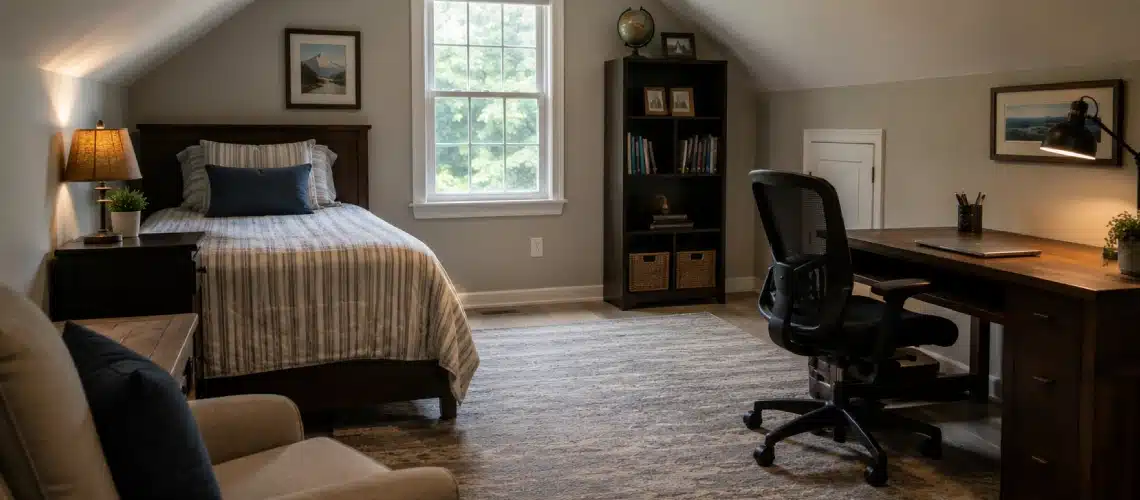
It might be a bedroom at the end of the hallway, a finished basement room, a home office, or a bonus room above the garage. The air feels heavier. The space feels less fresh. Sometimes there is a faint smell that is hard to describe.
At first, most homeowners assume it is temporary. They open a window, run a fan, or leave the door open. It improves briefly, then the feeling returns.
This is one of the most commonly ignored indoor air quality complaints in Maine and New Hampshire homes, and it usually has a physical cause, not a perception issue.
Quick Answer
When one room feels stuffier than the rest of the home, the strongest approach is often to evaluate the home as a whole while paying close attention to the room where the concern is most noticeable.
Common causes include:
– Poor airflow or weak/missing return air
– VOC buildup from furniture, carpets, paint, or cabinetry
– Pressure imbalances trapping air
– Localized moisture from small leaks, crawlspaces, or condensation
Frequently Asked Questions
1. Why does one room feel different from the rest of the house?
Uneven air circulation causes the room to receive insufficient fresh air compared to other areas.
2. Could this be a serious air quality issue?
It can. Persistent stuffiness may indicate VOC accumulation, humidity imbalance, or microbial growth.
3. How much does indoor air quality testing cost in Maine or New Hampshire?
Pricing depends on the testing scope. Evergreen can evaluate whole-home indoor air quality while including targeted sampling for the room or area where symptoms are strongest.
4. Will an air purifier fix it?
A purifier filters particles temporarily but does not solve airflow, VOC buildup, or moisture issues.
5. What does the test measure?
Depending on the concern, testing may include VOCs, mold spores, humidity, and particulates.
6. Can a consumer air monitor detect this issue?
No. Consumer devices cannot accurately measure VOC species or mold concentrations.
7. Does Evergreen perform remediation?
No. Evergreen provides testing data only; remediation decisions are separate.
8. Should HVAC be running during testing?
In most cases, normal operating conditions provide the most accurate snapshot of indoor air quality. Follow pre-test instructions before sampling.
9. Could this be a serious air quality issue?
A whole-home indoor air quality assessment is often the stronger starting point because it allows the affected room to be compared with the rest of the home. Targeted sampling can still be included for the room where the issue is most noticeable.
What Is Actually Happening in That Room
Most single-room IAQ problems stem from one of four causes:
HVAC Airflow Imbalance
Air may enter via supply ducts but cannot return efficiently, leaving stale air trapped. Common in bonus rooms above garages, finished basements, or additions without HVAC redesign.
VOC Buildup From Room Contents
New furniture, carpet, paint, mattresses, and pressed wood products emit VOCs. Poor ventilation allows these compounds to accumulate.
Pressure Imbalance
Closed doors without return paths trap air, odors, and moisture in the room.
Localized Moisture
Small leaks, damp crawlspaces, condensation near windows, or moisture migration from attached garages can elevate humidity locally.
Why This Is Common in Maine and New Hampshire Homes
Single-room issues are frequent because many homes are modified without adjusting airflow or ventilation.
Older homes often include finished basements, converted attics, bonus rooms, or sunrooms added after the original HVAC system. These spaces may have uneven circulation.
Weatherization and air sealing reduce heating costs but also limit fresh air exchange.
This pattern is especially common in older and modified homes across Southern Maine, Portland, the Seacoast, Manchester, Concord, and surrounding New Hampshire communities.
Real-World Scenario
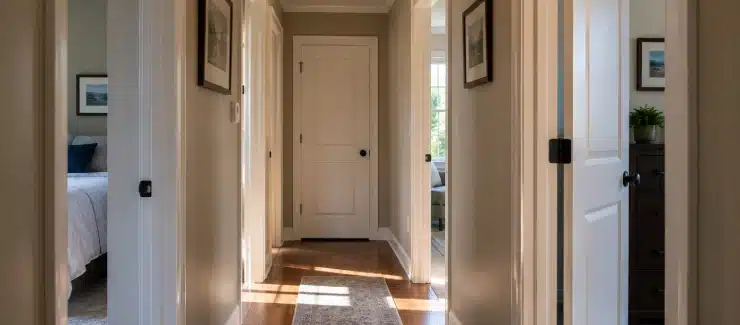
A 1990s colonial in Bedford, New Hampshire, had a bonus room above the garage finished in 2022.
The space included new carpet, fresh paint, and an oak desk. Within weeks, anyone working there reported headaches and a heavy feeling in the air.
Opening windows helped temporarily, but the discomfort returned when the door was closed. HVAC checks confirmed the system was functioning.
A whole-home IAQ assessment with targeted sampling for the affected room would determine whether VOCs, airflow issues, humidity imbalance, or moisture caused the problem.
Expert Insight
“Single-room air quality issues often point directly to the affected area. Testing helps determine whether the concern is related to airflow, VOCs, or localized moisture, so the next step can be based on evidence instead of guesswork.”
Angelo Quatrano, CIEC
Senior Indoor Environmental Consultant
Evergreen Air Quality Services – Maine & New Hampshire
Signs the Room Warrants Testing
Testing is recommended when two or more of the following are present:
– Issue lasts more than two weeks
– Worsens when the door is closed
– Symptoms appear only in that room
– A room that is in a basement, an addition, or above the garage
– New furniture or materials recently added
– Only one supply vent with no return
– Humidity differs from the rest of the home
When Testing Makes Sense
A whole-home IAQ assessment can help identify whether the issue is isolated to one room or connected to broader airflow, moisture, VOC, or mold-related conditions. Targeted sampling can be added for the affected room when needed.
We test only. No remediation. No upsell. Testing identifies whether VOCs, airflow imbalances, or moisture are present, providing a clear baseline for next steps.
Why This Matters
Even if only one room is affected, prolonged exposure can matter if that space is used frequently.
The EPA recommends indoor humidity between 30 and 50 percent. Above 60 percent increases microbial growth risk.
Testing helps identify whether issues are temporary or structural and guides targeted next steps, such as ventilation adjustments, material review, moisture investigation, or third-party remediation if needed.
Schedule Indoor Air Quality Testing in Maine and New Hampshire
If one room in your home feels stuffy, heavy, or different from the rest for more than two weeks, a whole-home IAQ assessment with focused testing of the affected space can help identify what is causing the difference.
Schedule indoor air quality testing in Maine and New Hampshire.
Certified lab results in 24–48 hours.
Call (207) 310-7733 or book online.
