
Reviewed for accuracy by Lynn Campbell, CIEC, Certified Indoor Environmental Consultant.
The power went out for a day. Maybe two. Maybe longer if a storm knocked out the grid across the neighborhood. When the electricity came back on, everything looked normal. The lights work. The refrigerator is humming again. The AC is cooling.
But the house does not quite feel the same.
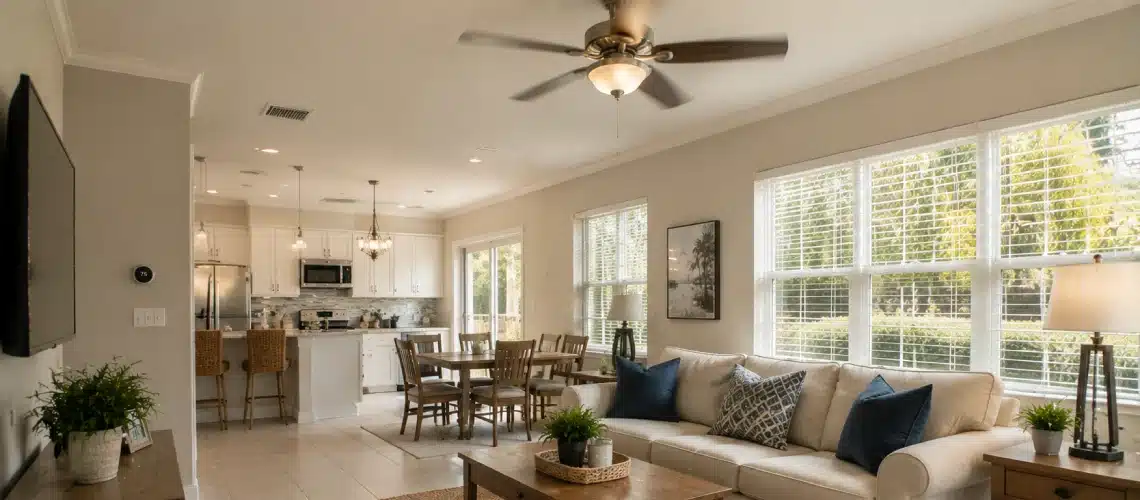
The air seems a little heavier. There is a faint musty smell near the closets. One of the bedrooms feels warmer than the rest, even though the thermostat says everything is fine. You are not sure if the home is back to normal or if something changed while the power was out.
A short outage does not automatically mean your indoor air needs testing. A longer outage, especially in Florida summer conditions, deserves closer attention. This article walks through the difference and helps you decide which category your home falls into.
Quick Answer
A short outage does not automatically require indoor air testing. Monitoring may be reasonable when humidity, odor, and comfort return to the home’s normal range after power and cooling are restored. Testing may be worth considering when a musty smell, elevated humidity, or room-level differences persist or recur after cooling is restored, especially following an extended outage in Florida summer humidity.
What Changes Indoors When the AC Stops During an Outage
Florida’s humid climate can cause indoor conditions to change quickly when air conditioning stops. There is no single safe outage duration for every home.
How quickly humidity becomes a concern depends on outdoor conditions, the length of the outage, air leakage, the building, and how long cooling remains unavailable. Rather than relying on a fixed number of hours, monitor whether humidity, odor, and room conditions return to the home’s normal range after power and cooling are restored.
Several things change during an extended outage:
Moisture control stops. Air conditioning removes moisture while cooling. When the system is off, indoor humidity can rise, increasing the chance of condensation on cooler surfaces and moisture absorption by porous materials.
Air circulation decreases. Without normal HVAC circulation, humidity and temperature can vary more between rooms, particularly in closets, pantries, guest rooms, and other enclosed spaces.
Indoor humidity can rise. The amount varies by the home’s normal conditions, outdoor humidity, air leakage, and outage duration, so a fixed percentage increase should not be assumed.
Enclosed rooms retain moisture longer. Even after power returns, spaces like closets, HVAC utility rooms, and interior bathrooms take longer to dry out than open living areas. The AC restores comfort in the main rooms first.
Materials dry more slowly. Fabric, drywall, wood cabinetry, and upholstered furniture absorb moisture during the outage and release it slowly over the following days.
None of this guarantees a problem. It explains why a home can look normal after power returns while its indoor conditions are still catching up.
When Monitoring After Power Returns May Be Reasonable
Monitoring means watching how things settle back to normal without immediately calling for testing. This is often the right first step. Monitoring may be reasonable when:
Power and cooling were restored within a short window. Indoor humidity returns to the home’s usual range after cooling is restored. No persistent musty or unfamiliar odor appears. All rooms return to feeling normal, including closets and enclosed spaces. There was no known water intrusion during the outage. The concern does not return over the following days.
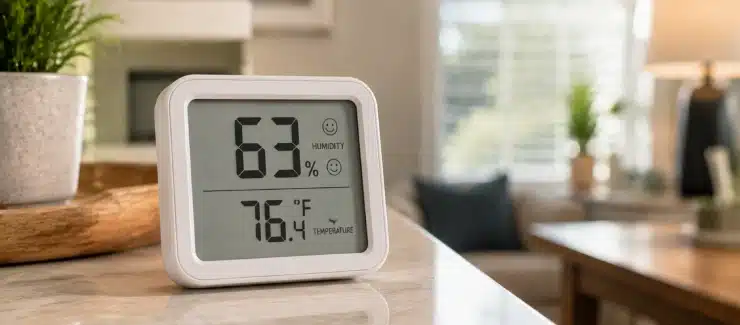
A basic digital hygrometer can make monitoring easier. Check humidity in multiple rooms, including a closet and a bedroom, for several days after power is restored. If readings return to the home’s usual range and no odor or room-level concern persists, continued monitoring may be reasonable.
What monitoring cannot do is confirm that no concealed issue exists. It tracks symptoms, not the underlying environment.
When Testing After an Outage May Be Worth Considering
Some situations warrant more than watching. Testing may be worth considering when:
A musty smell appears after power returns and does not fade within a few days. Indoor humidity remains elevated relative to the home’s normal range even with AC running. One room continues to feel different, warmer, or heavier than the rest of the home. An HVAC closet, laundry room, or other enclosed space feels damp. There was known water intrusion during the outage, such as storm-driven rain, a roof leak, or a plumbing issue. Odor returns or intensifies whenever the HVAC system runs. Indoor conditions fail to normalize within a reasonable window after power is restored.
If the outage happened during or after a heavy rain event, the two concerns may overlap. In that case, mold testing after heavy rain in Florida covers the moisture-intrusion side specifically. If the home looks normal but something feels off, hidden indoor-air concerns when nothing looks wet covers that decision path.
IAQ Testing Versus Mold Testing
These two categories overlap but are not interchangeable. Understanding the difference helps you choose the right starting point.
Indoor air quality testing evaluates broader conditions in the areas sampled. Depending on scope, it can include humidity and temperature readings, particulate measurements, and comparisons between rooms or between indoor and outdoor conditions where appropriate.
Mold testing focuses specifically on microbial activity, using air sampling and, when appropriate, surface sampling. Results are typically compared to outdoor baseline levels and analyzed by an accredited laboratory.
The right approach depends on the concern. If humidity and general comfort are the main issues after an outage, broader IAQ testing may be a reasonable starting point. If musty odor, visible moisture history, or specific mold concerns are present, mold sampling may be appropriate. These are not interchangeable tests, and the scope should be based on the actual pattern of concern rather than defaulting to one or the other.
What Testing Can Clarify
Testing evaluates the areas sampled, which means the results describe those specific rooms and conditions at the time of sampling. Depending on scope, testing may clarify:
Conditions in the areas evaluated. How indoor conditions compare to outdoor baseline where applicable. Differences between rooms that felt affected and rooms that felt normal. Whether findings suggest additional moisture, HVAC, or building investigation is warranted.
Just as important, understand what testing cannot do. It cannot evaluate every concealed space (inside wall cavities, above ceilings, inside ductwork). It may not locate the exact source of a moisture concern. It does not replace electrical, HVAC, plumbing, or building envelope investigation. It provides information for decisions, not a complete map of every hidden condition in the home.
How Evergreen Can Help
Evergreen Air Quality Services provides independent indoor air quality testing and mold testing for homes across Central Florida.
We test only. No remediation. No cleanup. No upsell.
Evergreen separates testing from remediation, cleanup, repairs, and HVAC services. Because we provide testing and reporting only, homeowners receive environmental findings without being sold corrective work by the same company.
Testing scope, sample collection, laboratory analysis, and reporting vary based on the property and the concern being evaluated.
Frequently Asked Questions
1. Can a power outage affect indoor air quality in a Florida home?
Yes, especially during extended outages in summer humidity. When AC stops, indoor moisture control stops, air circulation stops, and humidity rises. Enclosed rooms and materials absorb moisture during the outage and release it slowly after power returns. The extent depends on outage duration and outdoor conditions.
2. Does every extended AC outage require mold testing?
No. Many outages resolve without lasting indoor effects, especially when power returns quickly and no water intrusion occurred. Testing is more appropriate when musty odor, elevated humidity, or room-level differences persist for days after cooling is restored, not immediately following every outage.
3. What should I monitor after power and air conditioning return?
Watch indoor humidity levels across multiple rooms, especially closets and enclosed spaces. Note any persistent musty smell, one-room differences in temperature or comfort, or odor that returns when the HVAC runs. A basic hygrometer can help track whether humidity returns to the home’s usual range over the following days.
4. Is a musty smell after an outage a reason to test?
It is a signal worth investigating if it persists. A musty odor can be associated with moisture or microbial conditions, but odor alone does not confirm the species, location, or concentration. Testing can provide measurable information about the areas evaluated.
5. Can a dehumidifier return the home to normal?
Sometimes. A dehumidifier can accelerate humidity recovery after an outage. It reduces symptoms but does not address concealed moisture that may have been absorbed into materials, or a moisture source that continued during the outage. If humidity does not stabilize with a dehumidifier running, testing may be worth considering.
6. Does Evergreen perform mold removal or repairs?
No. Evergreen provides testing and reporting only. We do not perform remediation, cleanup, restoration, repairs, or HVAC work. If findings indicate that corrective action is warranted, the homeowner selects the appropriate contractor independently. This keeps testing separate from any corrective work that may follow.
7. How long do laboratory results take?
Turnaround depends on the testing scope, samples collected, and laboratory processing. Evergreen can confirm the expected timeframe for your specific assessment when scheduling.
Schedule Indoor Air Quality or Mold Testing in Central Florida
If persistent odor, elevated humidity, or room-level differences remain after power and cooling are restored, testing may help provide measurable information about the indoor areas evaluated.
Call (407) 625-4458 or book online.
About the Reviewer
Lynn Campbell is a Certified Indoor Environmental Consultant serving Florida homeowners. Lynn specializes in indoor air quality testing, mold-related conditions, and environmental analysis for residential and commercial properties. His work focuses on independent testing and reporting without remediation or cleanup services.
