
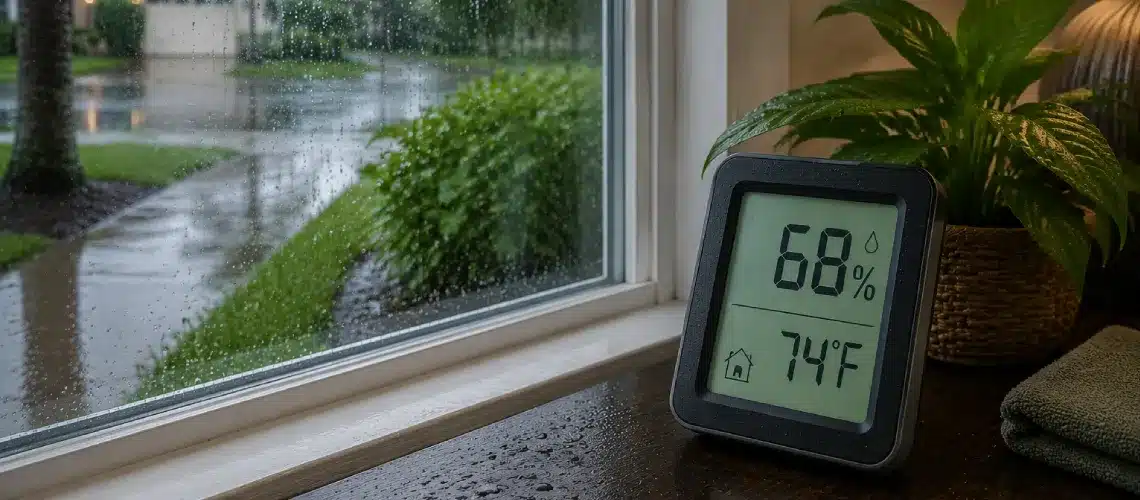
After a heavy Florida rainstorm, most homes appear completely normal on the surface. The exterior dries quickly, and there are no obvious signs of damage or flooding. From a visual standpoint, everything may seem stable.
However, indoor conditions do not always match what is visible outside. Moisture can enter a home in subtle ways during storms. It may move behind walls, settle beneath flooring, or remain trapped in enclosed spaces such as closets, attics, or HVAC areas.
In many Central Florida homes, these hidden moisture pathways are common due to construction styles and weather conditions. Homeowners may notice subtle changes such as a musty odor or increased indoor humidity even when no visible water intrusion is present. This creates uncertainty about whether indoor air conditions have changed after the storm, which is where mold testing becomes relevant.
Quick Answer
Mold testing makes sense after heavy Florida rain when there are signs such as musty odor, elevated humidity, damp indoor areas, or concern that moisture may have entered hidden parts of the home. Testing provides measurable confirmation of indoor air changes.
In many cases, the strongest approach is to evaluate the home as a whole while paying close attention to the room where the concern is most noticeable.
How Heavy Rain Can Affect the Inside of Your Home
Heavy rain can affect a home without visible flooding. Common subtle changes include:
– Moisture behind walls from small entry points or gaps
– Flooring systems retaining moisture beneath surface layers
– Window and door frame seepage during sustained rainfall
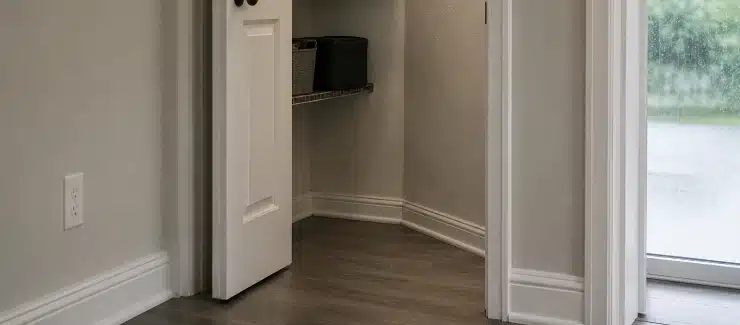
– Enclosed spaces such as closets or HVAC areas trapping humidity
– Attics and roof structures holding residual moisture
– Slab-adjacent areas retaining storm-driven humidity
– Stored items absorbing moisture and affecting indoor air balance
Why This Matters in Florida Homes
Florida homes operate in a naturally humid environment, which makes moisture control more sensitive during and after storms. When heavy rain occurs, humidity levels can shift quickly and may remain elevated longer than expected.
Many homes rely on sealed, air-conditioned environments, which can slow the drying process when moisture enters hidden areas. These humidity patterns are especially common across Central Florida, including Orlando, Tampa, and surrounding communities, where summer moisture levels stay elevated for long periods.
When Monitoring May Be Enough
Not every heavy rain event requires testing. Monitoring may be sufficient if:
– No water entered the home during the storm
– Indoor humidity returns to normal quickly
– No new odors develop after rainfall
– Surfaces and materials dry within expected timeframes
– No repeated moisture patterns are observed
When Testing Makes Sense
Walls, HVAC closets, slab-adjacent areas, or enclosed spaces remaining moist are key triggers for testing. Testing is recommended when:
– Musty odor appears after heavy rain
– Indoor humidity remains elevated for extended periods
– Damp areas take more than 24–48 hours to dry
– Indoor discomfort or symptoms increase after rainfall
– Visible staining appears on walls, ceilings, or floors
– The same area repeatedly becomes damp after storms
A whole-home IAQ assessment can help identify whether the issue is isolated to one room or connected to broader airflow, moisture, VOC, or mold-related conditions. Targeted sampling can be added for the affected room when needed.
What Evergreen Does
Evergreen Air Quality Services provides independent mold and indoor air quality testing with laboratory analysis to help homeowners understand whether moisture has affected indoor air after heavy rain.
We test only. No remediation. No cleanup. No upsell.
FAQ
1) Should I test for mold after heavy rain?
Yes, if musty odor, elevated humidity, damp areas, or repeated moisture signs appear indoors after heavy rain.
2) How soon after water intrusion can mold become a concern?
Under the right moisture and temperature conditions, mold-related concerns can begin within 24 to 48 hours. Air changes may occur before visible growth appears, especially when moisture is trapped behind walls, near windows, HVAC areas, or enclosed spaces.
3) How long do lab results take?
Typically 24–48 hours after processing.
4) Can a dehumidifier solve the issue?
A dehumidifier may help temporarily, but it does not confirm underlying moisture concerns.
5) Does Evergreen remove mold if testing finds a problem?
No. Evergreen only provides testing and reporting.
6) What if I do not see visible mold?
Mold-related air changes can occur before visible growth appears, especially when moisture is trapped behind walls, near windows, HVAC areas, or enclosed spaces.
Final CTA
If your Florida home smells musty, feels damp, or shows moisture signs after heavy rain, testing can show whether the indoor air has been affected.
Schedule mold or indoor air quality testing in Central Florida.
Certified lab results in 24–48 hours.
Call (407) 625-4458 or book online.
About the Reviewer
Lynn Campbell is a Certified Indoor Environmental Consultant (CIEC) serving Florida. Lynn specializes in indoor air quality testing, mold-related conditions, humidity-related concerns, and environmental analysis in high-moisture climates. Lynn’s work focuses on independent testing and reporting without remediation or cleanup services.
