
Reviewed for accuracy by Angelo Quatrano, CIEC
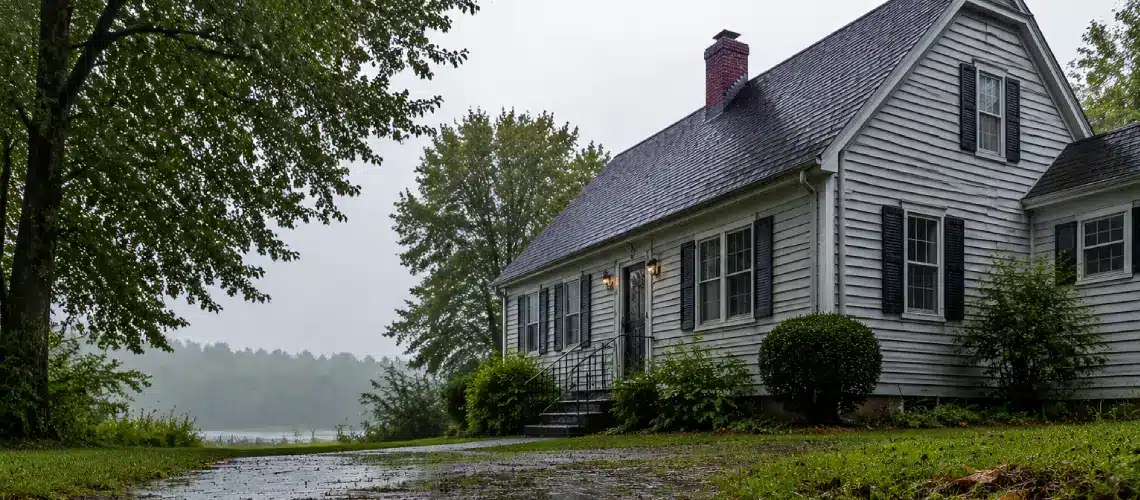
After a heavy rainstorm, a home may appear normal from the outside. The yard dries, exterior surfaces seem unchanged, and there may be no obvious sign of flooding or damage.
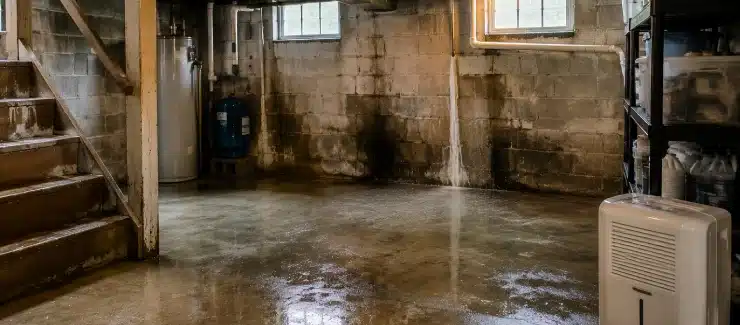
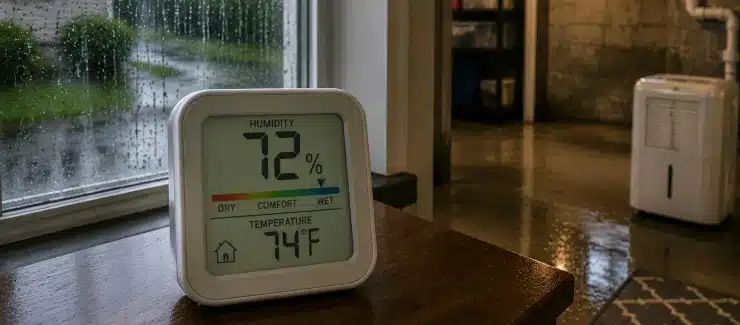
Inside the home, however, conditions can be different. A homeowner may notice a faint musty odor, slightly elevated humidity, a damp-feeling room, or moisture near a window or exterior wall. These subtle changes are easy to overlook, especially when no standing water is present.
Moisture can enter through small gaps, aging seals, roof penetrations, windows, foundations, or other vulnerable areas. It may remain behind walls, beneath flooring, near attic insulation, inside crawlspaces, or in enclosed rooms with limited airflow.
In Maine and New Hampshire, this is especially relevant in older homes, coastal properties, or basement-heavy houses where airflow and drying may be slower.
If your main concern is a recurring basement odor throughout the summer rather than a specific storm event, read Evergreen’s separate guide to musty basement smells.
Quick Answer
Mold testing may make sense after heavy rain when a musty odor develops, humidity remains elevated, damp areas do not dry, staining appears, or there is concern that moisture has reached hidden parts of the home. Testing provides measurable information about indoor air conditions and can guide next steps.
How Heavy Rain Can Affect Indoor Conditions
Heavy rainfall can affect a home without causing visible flooding. Moisture may enter gradually, remain concealed, or collect in unmonitored areas.
Possible changes include:
– Moisture entering behind walls through small exterior gaps
– Water collecting beneath flooring materials
– Seepage around windows or door frames
– Dampness near exterior wall and floor junctions
– Enclosed closets or storage areas retaining humidity
– Attic materials holding residual moisture
– Crawlspaces or foundation areas becoming damp
– HVAC-adjacent areas experiencing humidity changes
– Stored items absorbing moisture
– Rooms drying at different rates after the storm
Even if visible surfaces appear dry, concealed areas may take longer to return to normal conditions.
When Monitoring May Be Reasonable
Monitoring may be appropriate when:
– No water entered the home
– Indoor humidity returns to its normal range
– No new odor develops
– Damp materials dry within a reasonable period
– No staining or discoloration appears
– The affected room returns to normal
– The same area is not repeatedly affected after storms
Homeowners should still watch for recurring odor, dampness, staining, or elevated humidity.
When Testing Should Be Considered
Testing should be considered when moisture-related changes persist or recur:
– A musty odor appears after heavy rain
– Indoor humidity remains elevated
– Dampness lasts longer than 24 to 48 hours
– Moisture is near walls, windows, floors, or enclosed spaces
– One room consistently feels different
– Water intrusion is suspected in a finished area
– New staining or discoloration appears
– A crawlspace or attic remains damp
– Rooms are repeatedly affected after storms
What Testing Can Clarify
Mold and indoor air quality testing can provide measurable information about conditions in the areas evaluated at the time of sampling. Air sampling may compare indoor findings with an outdoor baseline, while a whole-home assessment can help determine whether the concern appears isolated or connected to broader indoor conditions. Targeted sampling may then be added in the room or area where the concern is strongest.
Testing does not guarantee that every concealed area has been evaluated, and it may not identify the exact moisture source by itself. Findings can, however, help determine whether further moisture or building investigation is appropriate.
How Evergreen Can Help
Evergreen Air Quality Services provides independent mold and indoor air quality testing in Maine and New Hampshire.
The process may include:
– Reviewing homeowner concerns
– Evaluating relevant indoor areas
– Comparing conditions across rooms
– Laboratory-supported sampling where appropriate
Evergreen tests only. No remediation, cleanup, or removal services are provided, helping keep the testing process independent from companies that may profit from corrective work.
Frequently Asked Questions
1. Should I test for mold after heavy rain?
Testing may be worth considering if moisture signs, elevated humidity, persistent dampness, or odor changes appear indoors after heavy rain.
2. How soon after water intrusion can mold become a concern?
Under the right moisture and temperature conditions, mold-related concerns can begin within 24 to 48 hours. Testing may be appropriate when dampness, odor, or elevated humidity persists after the home should have dried.
3. What if I do not see visible mold?
Hidden moisture can affect indoor air before visible growth appears. Testing may be useful when musty odor, elevated humidity, or dampness persists after the home should have dried.
4. Is a musty smell after rain enough reason to test?
A musty odor that persists after normal drying may be a practical reason to consider testing, especially when it appears after heavy rain or repeatedly returns in the same area.
5. Can a dehumidifier solve the issue?
A dehumidifier may help reduce indoor humidity, but it does not confirm whether hidden moisture or mold-related conditions are affecting indoor air.
6. Does Evergreen remove mold if testing finds a problem?
No. Evergreen provides independent testing and reporting only. It does not provide mold remediation, removal, or cleanup services.
7. How long do test results take?
Laboratory turnaround is typically 24 to 48 hours after sample processing.
Schedule Mold or Indoor Air Quality Testing in Maine & New Hampshire
Schedule Mold or Indoor Air Quality Testing in Maine & New Hampshire
If your Maine or New Hampshire home smells musty, feels damp, or shows recurring moisture signs after heavy rain, testing can help evaluate whether indoor air conditions have changed.
Schedule independent mold or indoor air quality testing for your Maine or New Hampshire home.
Laboratory results are typically available within 24 to 48 hours after sample processing.
Call (207) 310-7733 or book online.
About the Reviewer
Angelo Quatrano is a Certified Indoor Environmental Consultant serving Maine and New Hampshire. Angelo specializes in indoor air quality testing, mold-related conditions, asbestos inspection and testing, and environmental analysis for residential and commercial properties. His work focuses on independent testing and reporting without remediation or cleanup services.
