
Reviewed for accuracy by Lynn Campbell, CIEC, Certified Indoor Environmental Consultant
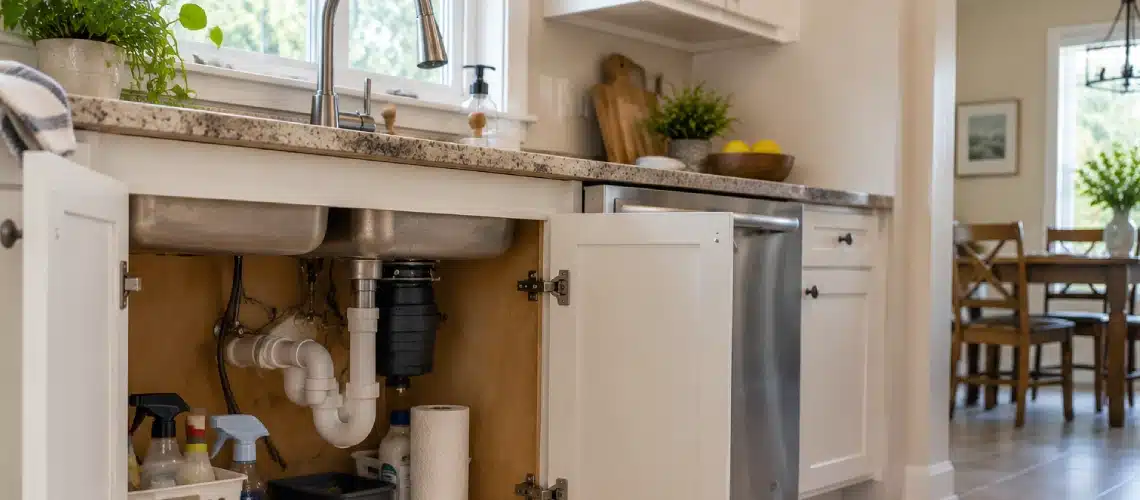
A supply line under the bathroom sink lets go overnight. A toilet base seeps for a day before anyone notices. The ice maker line behind the refrigerator drips for a week without anyone realizing it. In every one of these situations, the fix is usually simple: the part gets tightened or replaced, the water gets mopped up, a fan runs for a day or two, and the floor or cabinet base looks dry again.
Then the question sets in. The leak is gone, the surface is dry to the touch, and everything looks normal, but there’s a nagging uncertainty about what might still be sitting behind the baseboard, under the flooring, or inside the cabinet toe-kick. For Central Florida homeowners, where humidity is already high for most of the year, that uncertainty is reasonable. It doesn’t mean something is wrong. It means the situation deserves a clear way to think through it.
Quick Answer
Not every small plumbing leak requires mold testing. Monitoring is often a reasonable first step when the leak source was corrected quickly, the affected materials dried out in the days that followed, no musty odor developed or lingered, and the area has returned to looking and smelling like the rest of the home.
Testing may be worth considering when a musty odor does not go away, when humidity or staining remains, or when the source of water exposure is unclear. Some homeowners may also want measurable information about areas of concern instead of relying only on what they can see. There’s no single rule that applies to every leak. The details of what happened, and what’s happened since, are what should guide the decision.
Why “Dry to the Touch” Does Not Tell the Whole Story
Surface dryness is a useful signal, but it’s a limited one. When a wall, cabinet surface, or section of flooring feels dry to the touch, that tells the homeowner only that the exposed surface feels dry. It does not confirm the moisture condition of materials beneath or behind it.
Depending on how the leak occurred and how long it went unnoticed, moisture can behave differently once it’s out of sight. Water from a supply line leak under a sink can travel along a cabinet floor and settle at the back edge, against the wall, where air doesn’t circulate as easily. A slow leak at a toilet base can wick into subflooring before it ever reaches the surface of the tile. None of this means moisture is present in a given case. It simply means that a dry-looking surface, on its own, isn’t proof that everything underneath dried at the same rate, or dried at all.
This is not a reason to assume the worst after every leak. A small, promptly addressed leak does not automatically lead to a lasting indoor-air or mold concern. It’s a reason to distinguish between “the surface is dry” and “the situation is fully resolved,” and to know what to watch for in between. For a related Florida scenario, Evergreen also explains what homeowners can consider even when nothing looks wet.
What Homeowners Can Monitor
After a small leak has been addressed and cleaned up, there are a handful of things worth keeping an eye on over the following days and weeks:
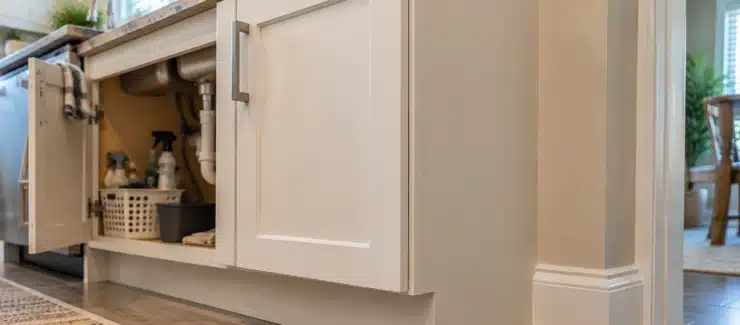
A musty or earthy odor that shows up and doesn’t fade within a reasonable time, especially one that’s noticeable when a cabinet, closet, or the room itself has been closed up for a while. Staining or discoloration on flooring, baseboards, drywall, or cabinet material near where the leak occurred. Swelling, warping, softness, or peeling in materials that were near the water, such as cabinet toe-kicks, laminate flooring seams, or baseboard trim. A room or area that seems to hold more humidity than the rest of the home, even after the air conditioning has been running normally. Odor that returns each time a cabinet door or closet is closed for a period, even if it seems to clear when the space is opened up. A concern that seemed resolved initially but reappears days or weeks later.
None of these signs, on their own, confirm mold is present. These are practical signs homeowners can watch for without special equipment. They help show the difference between an area that is truly fine and one that may still need attention.
When Monitoring May Be Reasonable
For a lot of small, promptly handled plumbing leaks, monitoring is a sensible approach rather than jumping straight to testing. Monitoring tends to make sense when several things are true at once: the source of the leak was identified and corrected quickly, the affected area was dried out and there was no prolonged period of standing water or saturation, no musty odor developed, or if one did appear briefly, it didn’t persist, there’s no staining, warping, or other material change that’s shown up since, and the humidity and general feel of the space have returned to matching the rest of the home.
When those conditions are met, many homeowners reasonably choose to keep an eye on the area for a few weeks rather than pursue testing right away. It’s worth being direct about the limits of this approach, though: monitoring is based on what can be observed from the outside. It cannot confirm, one way or another, whether moisture remains in a concealed space like a wall cavity or beneath a flooring layer. It’s a reasonable middle step for situations that look and feel resolved, not a guarantee that they are.
When Mold or IAQ Testing May Be Worth Considering
Testing becomes a more relevant option when the situation doesn’t settle the way a fully resolved leak typically does. A few examples of when that’s worth thinking about: a musty odor develops after the visible cleanup and doesn’t go away on its own, materials in the affected area were wet for longer than expected before anyone noticed the leak, there’s real uncertainty about how far the water actually traveled, whether under flooring, behind a wall, or into an adjoining space, a room next to where the leak happened continues to feel or smell different from the rest of the house, an odor that seemed to clear comes back once a space is closed up again, or the homeowner would simply rather have measurable information about the specific areas in question than rely on appearance and smell alone.
None of these situations automatically means mold is present. They’re circumstances where testing may provide clarity that monitoring by itself can’t. For broader decision guidance, see when to test indoor air quality in Florida.
What Testing Can Clarify
Mold or indoor air quality testing evaluates the specific areas and samples that are assessed as part of that testing, and it can provide measurable information about conditions in those locations. Depending on the scope of testing performed, that might include air samples, surface samples, or moisture readings in the areas of concern near where the leak occurred.
Testing gives homeowners something monitoring can’t: a documented, measurable result for the specific areas evaluated, rather than an impression based on smell or appearance. That’s useful information a homeowner can use to decide their next step. It’s not, however, a blanket statement about the condition of the entire home, and it shouldn’t be read as one.
What Testing Cannot Determine.
It’s just as important to be clear about the limits. Testing does not evaluate every concealed space in a home; it evaluates the locations and materials that are actually sampled or assessed. It may not pinpoint the exact source or path the original leak took, particularly if water traveled along framing or subflooring before surfacing elsewhere. It does not replace a plumbing inspection, a building assessment, or a structural evaluation in situations where those are actually what’s needed, for example, if the underlying leak itself hasn’t been fully resolved. And it does not confirm that every condition observed in a home was caused by that specific leak. Conditions found during testing could have other, unrelated explanations.
Testing is a tool for gathering measurable information about specific areas, not a single answer to every question a homeowner might have after a leak.
Small Plumbing Leak vs. Major Water-Loss Event
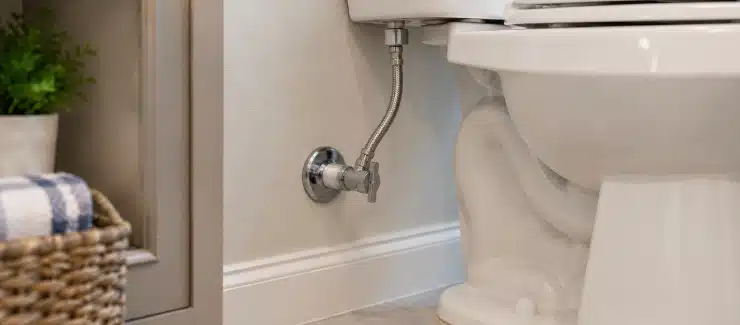
It’s worth drawing a clear line here. This article focuses on smaller plumbing issues that have already been resolved, such as a leaking supply line, toilet base, or appliance connection that was noticed and fixed quickly. It is not about widespread flooding, major structural water damage, sewage backups, or active, ongoing water intrusion.
Those larger situations call for different professionals entirely, plumbers to address active leaks, water-damage or restoration contractors for extraction and structural drying, and in some cases insurance professionals. Evergreen is not an emergency-response company, a restoration contractor, or a repair service. For a small, already-corrected leak where surfaces have dried and the main question is whether anything remains out of sight, independent testing is a fitting next step to consider. For an active or major water event, the priority is stopping and addressing the water itself first. For storm-driven moisture concerns after heavy rain, Evergreen has a separate Florida guide.
How Evergreen Can Help
Evergreen separates testing from remediation, cleanup and repair services. Because Evergreen provides testing and reporting only, homeowners can review the findings independently before deciding whether any additional professional investigation is appropriate.
Frequently Asked Questions
01. Does every plumbing leak require mold testing?
No. Many small leaks that are corrected quickly and dry out normally, with no lingering odor or staining, don’t need testing. Testing becomes more relevant when odor, staining, or uncertainty about concealed areas continues after the visible cleanup.
02. Can materials look dry while moisture remains underneath?
It’s possible. A surface can feel dry to the touch while flooring layers, subflooring, cabinet backing, or wall cavities nearby take longer to fully dry out, depending on how the leak occurred. Surface dryness is a helpful sign, but it doesn’t confirm what’s happening beneath the surface.
03. How long after a small leak should I monitor the area?
There isn’t a fixed, universal timeline that applies to every leak, since drying time depends on the materials involved, the amount of water, and the local conditions. In general, homeowners should watch whether odors, stains, or humidity return to normal and stay that way over time. There is no specific number of days that applies to every situation.
04. Is a musty smell after a leak a reason to test?
A musty odor that appears and then persists, rather than clearing on its own, is one of the more common reasons homeowners consider testing. An odor that shows up briefly and fades doesn’t necessarily point to the same thing as one that lingers or keeps returning.
05. Can mold testing identify exactly where a plumbing leak traveled?
Not necessarily. Testing evaluates the specific areas and samples included in that testing and can provide measurable information about those locations. It may not trace the exact path water took behind walls or beneath flooring, particularly if the leak went unnoticed for a period of time.
06. Does Evergreen perform mold removal or repairs?
No. Evergreen provides independent mold and indoor air quality testing and reporting only. We don’t perform remediation, cleanup, repairs, or any related corrective work.
07. How long do laboratory results take?
Turnaround time depends on the specific type of testing and laboratory analysis performed. Evergreen can walk homeowners through expected timing for their specific testing scope when they schedule.
Schedule Mold or Indoor Air Quality Testing in Florida
If a small plumbing leak appears resolved but a musty odor, material changes, or uncertainty about nearby indoor conditions remains, testing may help provide measurable information about the areas evaluated.
Call (407) 625-4458 or book online to schedule.
