Reviewed for accuracy by Lynn Campbell, CIEC
A musty smell in a closet, a room that always feels sticky, or a few weeks of unexplained stuffiness can send a Florida homeowner searching for answers online. Home air quality test kits, mold test kits, and small air monitors are easy to find and inexpensive, so the next question is natural: is one of these enough, or does the situation call for professional testing?
Quick Answer
A home test kit or monitor can be a reasonable, low-cost first look, especially for tracking humidity. It usually captures limited information, such as one spot sample or a few real-time readings, and it does not by itself show how conditions compare with outdoors, how far a concern extends, or what a result means for your home. Professional testing adds a defined scope, trained sampling, laboratory analysis, outdoor comparison where appropriate, and a written report. The two are not opposites: a kit or monitor can help you decide whether it is worth looking further.
This guide explains what each option can and cannot show, how to decide between them, and where Florida conditions matter. It is general education, not a recommendation for or against any product.
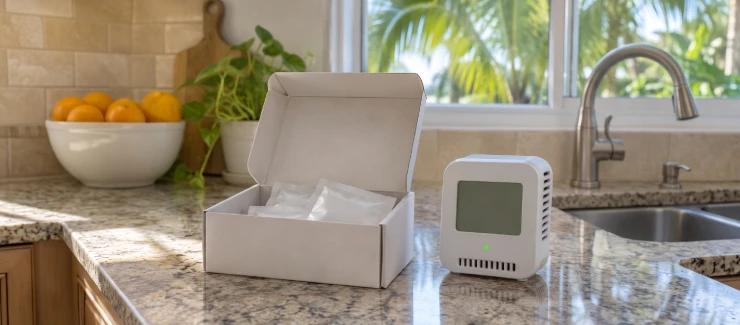
What a Home Test Kit or Monitor Can Show
Two different kinds of products are often grouped together:
- Sample-based kits for mold or dust, where you collect a sample at one spot, for example with a settle plate, tape, or swab, and either read it yourself or send it to a laboratory.
- Consumer air monitors with sensors that report readings such as humidity, temperature, particles, or total VOC levels over time.
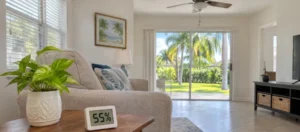
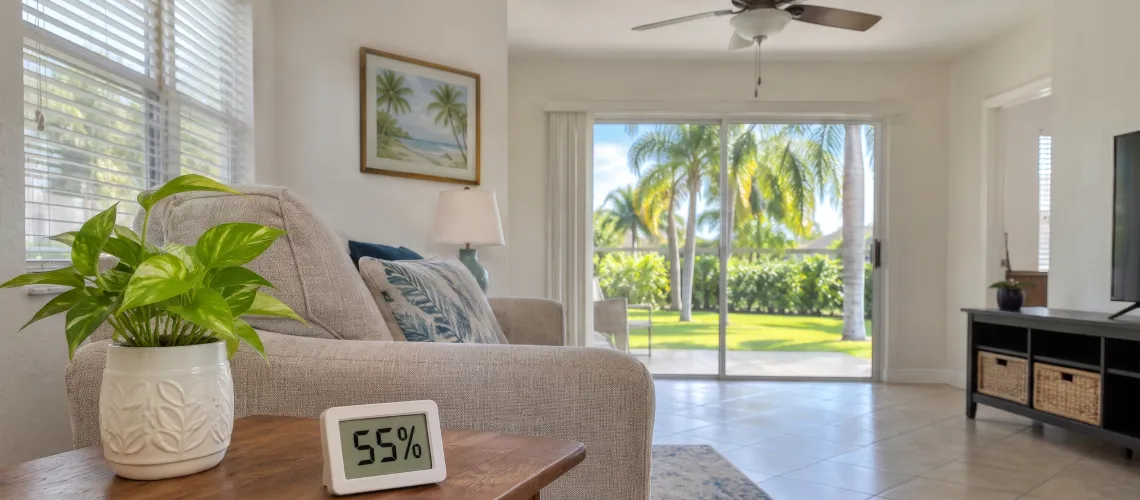
What a kit or monitor can tell you depends on the product, how the sample is collected, and how it is analyzed. A hygrometer is a good example of a tool that works well for a narrow job: it shows humidity in the spot where you place it, and tracking it over several days in Florida’s climate can reveal rooms that stay damp.
Where Home Kits and Monitors Fall Short
- One place, one moment. A kit reflects the spot and time of collection. A single sample does not represent the whole home.
- No outdoor comparison by default. Mold spores are naturally present in indoor and outdoor air, and Florida outdoor air carries them year-round. Finding spores on a plate does not by itself tell you whether indoor conditions are unusual.
- No standard to compare against. The EPA states that no federal limits have been set for mold or mold spores, so results need interpretation by someone experienced with sampling and results (EPA mold information).
- Sensor readings vary. Consumer sensors can differ from laboratory measurements and from one another, so a single reading is best treated as a trend, not a conclusion.
- No source or extent. A kit rarely shows where moisture or a contaminant is coming from, or how widespread it is.
What Professional Testing Adds
Professional testing starts with your concern and builds a defined scope around it. Depending on that scope, it may include:
- A visual and environmental review of the areas of concern.
- Air or surface sampling by a trained consultant, in the rooms that matter.
- Comparison with an outdoor baseline where appropriate.
- Laboratory analysis of the samples.
- A written report that explains the findings in plain language.
Mold laboratory results are typically available within 24 to 48 hours. Professional testing still has limits. It describes the areas and samples evaluated, not every concealed space.
Why Florida Conditions Matter
High humidity, heavy rain, and air conditioning that runs most of the year mean many Florida concerns involve moisture you cannot see: inside a closet, around an HVAC closet, or behind a wall. Those situations are hard to judge from one spot sample. If you are wondering about a home that looks fine but feels off, see can your Florida home have mold even if nothing looks wet.
How to Decide: Kit First or Professional Testing
A kit or monitor may be enough to start when:
- You mainly want to watch humidity over a few days.
- The concern is mild, new, and fading.
- You are still deciding whether anything needs a closer look.
Professional testing may be worth considering when:
- A musty odor persists or keeps returning.
- Humidity stays high even when the air conditioning runs normally.
- One room consistently feels different from the rest of the home.
- A water event, leak, or storm has occurred and you are unsure what remains.
- A kit result leaves you with questions it cannot answer.
- You want a written report to share with a landlord, buyer, insurer, or contractor.
If mold is already visible, the EPA notes that sampling is unnecessary in most cases. Whether testing helps depends on the question you are trying to answer. For more on timing, see when to test indoor air quality in Florida.
What Testing Cannot Prove
Neither a kit nor professional testing diagnoses health conditions. Results apply to the places and the time that were sampled, and testing may not identify every concealed condition. A result is information for a decision, not a guarantee about the whole property.
How Evergreen Can Help
Evergreen Air Quality Services provides independent indoor air quality testing and mold testing for homes in Orlando and Central Florida.
We test only. No remediation. No cleanup. No upsell.
Because Evergreen provides testing and reporting only, the findings are not tied to selling corrective work. You can read more about Evergreen’s Florida service area.
Frequently Asked Questions
1. Can a home test kit detect mold?
Some kits can show that mold spores collected at the spot and time of sampling. Because spores are normal in indoor and outdoor air, a result alone does not show whether conditions in your home are unusual.
2. Are home air quality monitors accurate?
Accuracy varies by product. Readings from consumer sensors can differ from laboratory measurements, so they are most useful for watching trends, such as humidity over several days.
3. Is a home test kit enough?
It can be enough for a first look at a mild, fading concern. When odor persists, humidity stays high, or you need a written report, professional testing may provide information a kit cannot.
4. What does professional testing include?
The scope depends on the concern. It may include an environmental review, air or surface sampling, comparison with an outdoor baseline, laboratory analysis, and a written report.
5. Does mold in the air always mean there is a problem?
No. Mold spores are normally present in indoor and outdoor air. What matters is how indoor conditions compare with outdoors and what the pattern in the home suggests.
6. Does Evergreen remove mold?
No. Evergreen provides independent testing and reporting only. We do not perform remediation, cleanup, repairs, or any corrective work.
7. How long do laboratory results take?
Mold laboratory results are typically available within 24 to 48 hours. Timing for other analyses depends on the test performed.
Call to Action
If a kit result or a lingering concern has left you with questions, contact Evergreen or call (407) 625-4458 to talk through a defined testing scope for your Florida home.