
Introduction
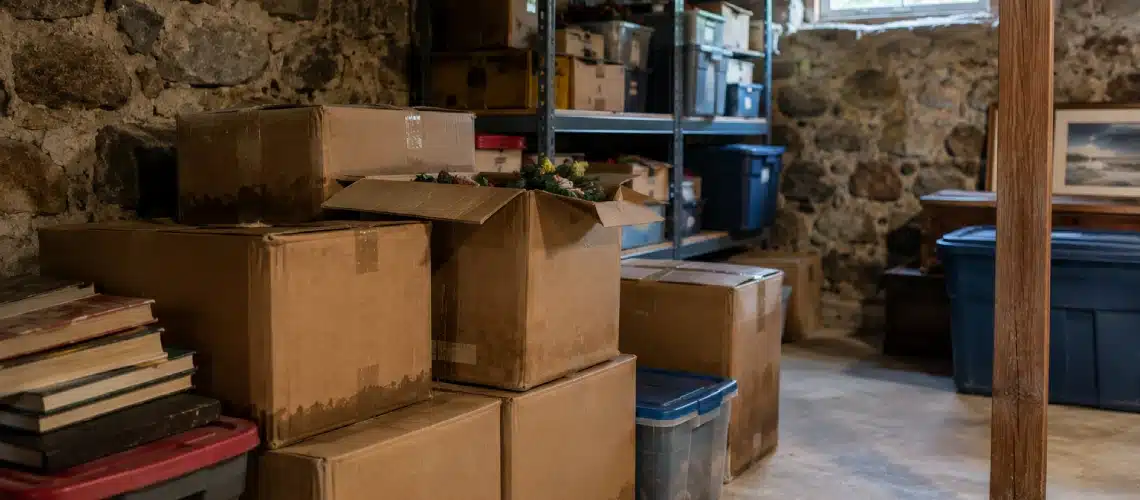
The snow is gone. The yard is dry. But the moment you open the basement door, that smell hits you again. Slightly earthy. Slightly stale. Heavier than it was in March.
If your basement smells musty in summer, it is usually not a leftover winter issue.
It is a moisture and air condition problem that becomes more active in warmer months.
Here is how to understand what is happening in your home and when it is worth testing.
Most homeowners assume musty basement smell is a winter problem. In Maine and New Hampshire, it is far more often a summer problem, and the reason has nothing to do with leftover snowmelt.
A musty smell is often the first signal homeowners notice, but it does not reveal whether the issue is active microbial growth or a broader air quality condition.
Here is what is actually happening, why it intensifies in June and July, and the specific signs that mean the issue has moved beyond ventilation and into something worth testing.
Quick Answer
A musty basement smell in summer typically indicates microbial activity, such as mold, mildew, or bacteria, producing microbial volatile organic compounds known as MVOCs.
The condition is most often triggered when warm humid summer air enters a cool basement and condenses on foundation walls, floors, and stored materials.
The EPA recognizes the Northeastern U.S. climate as one where this condensation pattern is especially common.
According to EPA indoor air quality guidelines, indoor humidity above 60% creates conditions where mold growth becomes more likely.
Quick Answers (Common Questions)
Why does my basement smell musty only in summer?
Summer air carries far more moisture than winter air. When that warm, humid air enters a cool basement, it cools below its dew point and releases moisture onto walls and floors. Microbes feed on that moisture and produce the musty smell.
Does a musty basement always mean mold?
A musty smell is one of the most reliable indicators of microbial activity, but the smell alone does not confirm the species, location, or concentration. Air and surface sampling are what answer those questions.
Is opening basement windows in summer a good idea?
In Maine and New Hampshire, no. Outside summer dew points often exceed basement surface temperatures, which means opening windows usually increases condensation rather than reducing it.
Will a dehumidifier solve the problem?
A properly sized dehumidifier lowers humidity, but it does not eliminate microbial growth that has already established. If the smell returns within hours of running a dehumidifier, that is a strong signal that testing is warranted.
What Is Actually Happening?
Here is the simple version:
Warm summer air enters a cooler basement and releases moisture on surfaces.
Here is what that means in detail:
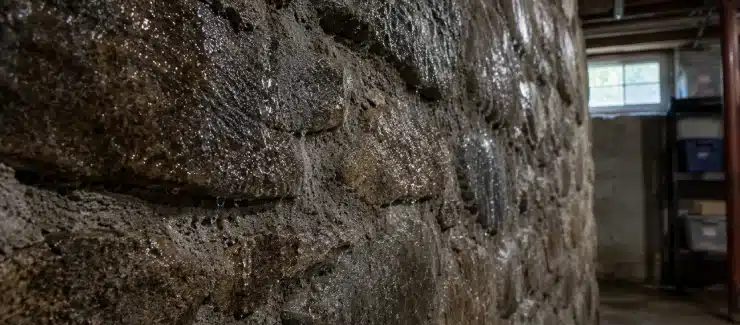
Basement walls and floors in New England homes stay cool well into summer. Concrete, fieldstone, and rubble foundations sit in direct contact with soil that remains in the 50s and low 60s through June and into July.
Meanwhile, summer air in coastal Maine and southern New Hampshire runs in the mid 70s with dew points that frequently climb into the 60s. Once outdoor dew points rise above cool basement surface temperatures, that moisture-heavy air can enter through doors, rim joists, dryer vents, foundation gaps, and open windows.
When that humid air contacts a basement wall sitting at 58 to 62 degrees, the air cools below its dew point. Moisture leaves the air and condenses on the wall.
No leak. No flooding. Just physics.
The EPA specifically identifies this pattern in its mold guidance: humid weather in generally cold climates, like the Northeastern U.S., can cause condensation on uninsulated ground-contact floor slabs or basement walls.
Once that condensation occurs, microbial growth can follow. Mold, mildew, and bacteria feed on the moisture, the organic matter in dust and stored items, and the cellulose in cardboard and wood. As they grow, they release MVOCs. Those gases are the smell.
This article explains why the smell develops. For the testing process and what your report includes, see our Mold Testing Services in Maine & New Hampshire page.
If you are unsure whether this is a mold issue or a broader air quality concern, see our IAQ vs Mold Testing Guide.
Indoor Humidity Levels and What They Mean
|
Humidity Level |
Meaning |
| Below 50% | Ideal indoor condition |
| 50–60% | Acceptable range |
| Above 60% |
Mold growth risk |
A single reading does not confirm the full source of a musty smell, but it gives you a useful starting point. If basement humidity stays above 60%, especially after dehumidifier use, testing can help confirm what is active in the space.
Why This Is Worse in Maine and New Hampshire
Maine and New Hampshire homes are more affected because of older foundation types, seasonal moisture exposure, and cooler basement conditions.
Many homes in the region were built before modern basement moisture control became common. Older fieldstone, rubble, and porous concrete foundations can absorb moisture and release it slowly into the basement air after humid weather.
This matters because many Maine and New Hampshire basements are not actively cooled in summer. The basement may stay near 60 to 65 degrees while outdoor air is 75 to 85 degrees and humid. When that warmer air reaches the cooler basement surfaces, condensation becomes much more likely.
This pattern is especially common in older homes and coastal or near-coastal areas, including Portland, Southern Maine, Portsmouth, the Seacoast region, Manchester, Concord, and surrounding New Hampshire communities.
These conditions are especially common in Southern Maine and coastal New Hampshire regions where humidity remains elevated through summer.
The result is a common regional pattern: a basement that seems dry in winter and spring can smell musty in June, July, and August.
A Real-World Scenario
Consider two homes, both in Cumberland County, Maine.
The first is a 1954 Cape Cod with a fieldstone foundation, a basement washer and dryer, and a finished family room added in 1998. The owner runs a 50-pint dehumidifier in the corner. By mid-July, the basement still smells musty, especially in the morning. The dehumidifier reservoir fills every other day.
The second is a 2007 colonial with a poured concrete foundation, a sealed sump pit, and a finished basement office. The owner does not use a dehumidifier. The basement smells fine.
The difference is not housekeeping. It is the combination of foundation porosity, age of materials, accumulated moisture history, and air pathways from outside. The first home has decades of moisture saturation in fieldstone that releases slowly all summer. The second home does not.
Both homes are well-maintained. Only one needs testing.
Expert Insight
“In long-term inspection experience across Maine and New Hampshire, one of the most common causes of summer mold complaints is condensation on cold foundation surfaces from incoming humid air. People assume mold is a leak problem. Most of the time, it is a dew point problem. The fix depends entirely on what the testing shows.”
Angelo Quatrano, CIEC
Senior Indoor Environmental Consultant
Evergreen Air Quality Services, Maine & New Hampshire
Signs That Testing Is Worth Considering
Use this as a quick check. If two or more apply, testing produces a clear answer faster than continued trial and error.
-
Smell stronger in mornings or after humid days
-
Comes from a specific area
-
Returns quickly after dehumidifier use
-
Humidity above 60%
-
Symptoms improve outside the home
-
Visible discoloration in basement areas
-
Home built before 1980
-
Smell clings to stored items
When Testing Makes Sense
If the smell is consistent and the source is unclear, testing gives you a clear answer.
We are testing-only. No remediation. No upsell.
Results in 24 to 48 hours.
For broader indoor air concerns beyond mold, see our Indoor Air Quality Testing Services page.
Why This Matters
A musty smell is a signal, not a diagnosis. It tells you something is producing MVOCs, but it does not tell you the species, concentration, source location, or level of concern.
Many homeowners try surface fixes first, such as cleaning, ventilation, or a dehumidifier. These steps may reduce moisture, but they do not always identify what is already active behind insulation, under stored materials, inside wall cavities, or near foundation surfaces.
Early testing helps prevent guessing. If microbial growth is present, identifying it early can reduce larger cleanup costs, hidden spread, and repeated summer odor problems.
Disclaimer
This information is for educational purposes and does not replace professional environmental assessment. Testing provides verified data specific to your home.
FAQ
How much does basement mold testing cost in Maine?
Targeted testing for one or two basement areas falls in the lower tier of our pricing structure. See the current rates on our pricing page. Whole-home assessments cost more and are appropriate when symptoms appear in multiple areas.
How long does mold testing take?
The on-site inspection typically takes 60 to 90 minutes. Certified lab results return in 24 to 48 hours with a detailed written report.
Can I test for mold myself with a hardware store kit?
DIY kits collect samples, but they do not provide certified lab analysis, species identification, comparison to outdoor baseline, or interpretation. For decisions that affect your health or property, certified testing is the standard.
What is the difference between mold testing and IAQ testing?
Mold testing identifies microbial growth specifically. Indoor air quality testing covers a broader range of issues including VOCs, particulates, humidity, and other contaminants. If the symptom is a musty smell, mold testing is usually the right starting point.
Should I remediate before testing or after?
Testing first is almost always the better sequence. Without testing, remediation is a guess about what to remove and where, which often leads to incomplete fixes and recurring problems.
Is mold in a basement dangerous if no one uses the basement?
Yes. HVAC return ducts, basement-to-living-space air pathways, and stack-effect air movement all carry basement air into living areas. A musty basement smell upstairs in summer is not a coincidence.
Do I need to leave my home during testing?
No. Testing is non-invasive. You can remain in the home during sampling.
Final CTA
If your basement has smelled musty for more than two to three weeks this summer, testing identifies whether you have active microbial growth, where it is concentrated, and what the species is.
That gives you a clear, defensible basis for next steps rather than continued guessing.
Schedule professional mold testing in Maine and New Hampshire homes.
Call (207) 310-7733 or book online.
Certified results in 24 to 48 hours.
About the Reviewer
Angelo Quatrano is a certified indoor environmental consultant serving Maine and New Hampshire. He specializes in air quality testing, mold-related conditions, basement moisture patterns, and environmental assessment for homes affected by seasonal humidity.
