
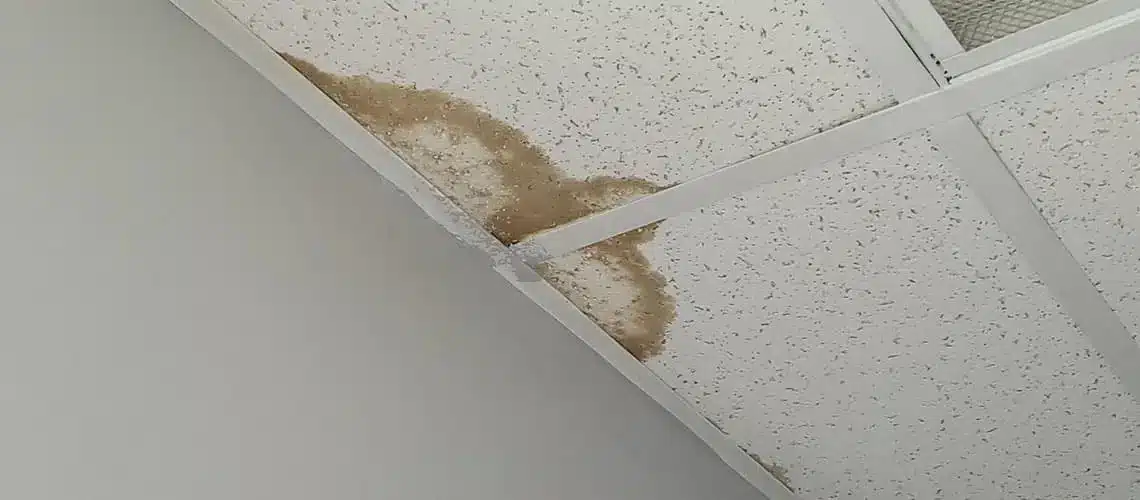
February is one of the most stressful months for homes across Maine and New Hampshire, even though the damage often stays hidden. Prolonged cold, heavy snow, ice dams, and repeated freeze–thaw cycles quietly force moisture into wall systems while homeowners focus on heating and snow removal. Inside the home, everything may appear normal. Behind the drywall, conditions can be very different.
This is why signs of mold behind drywall are most often discovered in late winter. February creates the perfect mix of trapped moisture, limited airflow, and sharp temperature differences that allow mold to develop out of sight. By the time visible damage appears, the issue has usually been active for weeks or months.
Evergreen Air Quality Services helps homeowners across Maine and New Hampshire identify hidden moisture and indoor air quality concerns through independent, testing-only services. Understanding how February weather affects your walls makes it easier to recognize signs of mold behind drywall early and act before spring exposes larger problems.
Why February Weather in Maine and New Hampshire Creates Hidden Moisture
February weather in the Northeast is defined by consistency. Cold temperatures persist. Snow remains on roofs and around foundations. Natural drying potential stays extremely low.
Three physical forces work together during February:
-
Ice dam formation along roof edges forces melting snow backward into attic spaces and exterior wall assemblies
-
Temperature differentials between warm indoor air and frozen exterior surfaces cause condensation inside wall cavities
-
Limited ventilation keeps moisture trapped as homes remain tightly sealed for energy efficiency
When moisture cannot evaporate, it settles into drywall, insulation, and wood framing. Over time, these conditions directly lead to signs of mold behind drywall, even in homes that appear dry and well-maintained.
High-Risk Interstitial Zones in Maine and New Hampshire Homes
Hidden mold follows predictable building-science pathways. During February, winter moisture most often affects the following zones:
-
Exterior wall assemblies exposed to wind-driven snow, where a compromised building wrap allows intrusion
-
Wall cavities beneath ice dam impact zones, where meltwater collects at base plates
-
Rim joists and foundation junctions where cold concrete meets warm framing
-
Finished basements where snowmelt increases hydrostatic pressure
-
Thermal bridges around bathroom and kitchen exhaust ducts
These areas experience strong temperature differences and restricted airflow, making them prime locations for signs of mold behind drywall to develop without warning.
Why February Is Riskier Than Other Winter Months
January is often too cold for melting. March brings more daylight and drying. February sits between the two.
During February:
1. Partial thawing introduces moisture
2. Homes remain tightly sealed
3. Insulation and drywall stay cold
4. Drying potential remains limited
Homes behave like chimneys in winter. Warm indoor air rises and escapes through the attic, creating negative pressure known as the Stack Effect. Cold, damp air is pulled inward through rim joists and wall cavities. When this air reaches the dew point behind the drywall, condensation forms where it cannot be seen.
This process explains why signs of mold behind drywall appear more frequently in February than in any other winter month in Maine and New Hampshire.

The Role of Drywall and Insulation in Hidden Mold Growth
Drywall absorbs moisture quickly. Insulation behind it often holds moisture even longer.
1. Fiberglass insulation traps moisture between fibers
2. Cellulose insulation wicks moisture laterally
3. Wood framing retains dampness when airflow is restricted
In homes built before 1981, prolonged February moisture can also soften older joint compound or plaster that may contain asbestos. When damp, these materials become more friable. Scrubbing or disturbing affected drywall can release fibers unintentionally.
Because drywall conceals these materials, signs of mold behind drywall often develop long before surface damage appears.
When Professional Testing Becomes Important
Visual checks cannot confirm conditions behind walls. February moisture problems are rarely visible.
Evergreen Air Quality Services provides testing and documentation only. No remediation or repairs are performed, ensuring objective findings.
While New Hampshire has repealed the former state mold assessor licensing mandate under HB 1126, defensible evaluations still rely on established industry standards. Evergreen aligns assessments with IICRC S520 principles and ACAC methodologies, which remain the gold standard for real estate documentation and legal defensibility in the Northeast.
Assessment methods may include:
1. Infrared thermography to identify thermal anomalies
2. Non-invasive moisture mapping
3. Borescopic wall cavity inspection when needed
4. Environmental air and surface sampling guided by data
All samples are analyzed by independent, AIHA-LAP-accredited laboratories. Testing confirms whether signs of mold behind drywall are present and whether indoor air quality has been affected.
The Inspector’s Toolkit for Hidden Mold
Professional detection relies on specialized equipment:
1. Infrared thermography detects evaporative cooling behind dry surfaces
2. Borescopic cameras provide internal cavity views through small access points
3. Pinless moisture meters map moisture depth without damaging finishes
These tools allow confirmation of signs of mold behind drywall without unnecessary demolition.
What Homeowners Can Do During February
While the weather cannot be controlled, awareness matters. During February, homeowners should:
1. Monitor indoor humidity levels
2. Watch exterior wall lines for changes
3. Address ice dams promptly
4. Keep exhaust vents clear
5. Take persistent odors seriously
These steps help identify signs of mold behind drywall earlier but do not replace professional testing.
Frequently Asked Questions
1. Can mold grow behind drywall in Maine and New Hampshire during the winter?
Yes. February moisture and temperature differences frequently support hidden growth.
2. Are ice dams a common cause of hidden mold?
Yes. Ice dams allow water to enter wall cavities, where it can remain trapped.
3. Do signs always include strong odors?
No, early signs of mold behind drywall often develop without noticeable smells.
4. Is professional testing invasive?
No. Modern tools allow targeted inspection with minimal disruption.
5. When should testing be considered?
When winter moisture persists, or indoor conditions feel different after February weather.
February places unique stress on homes in Maine and New Hampshire. Snow, ice, and temperature differences create moisture pathways that are easy to miss and difficult to detect without proper tools.
If you are noticing signs of mold behind drywall or suspect hidden winter moisture, Evergreen Air Quality Services provides independent, testing-only evaluations you can trust.
📞 Call 207-310-773
📍 35 Main Street, Suite #1, Windham, ME 04081
📧 info@evergreenairquality.com
