
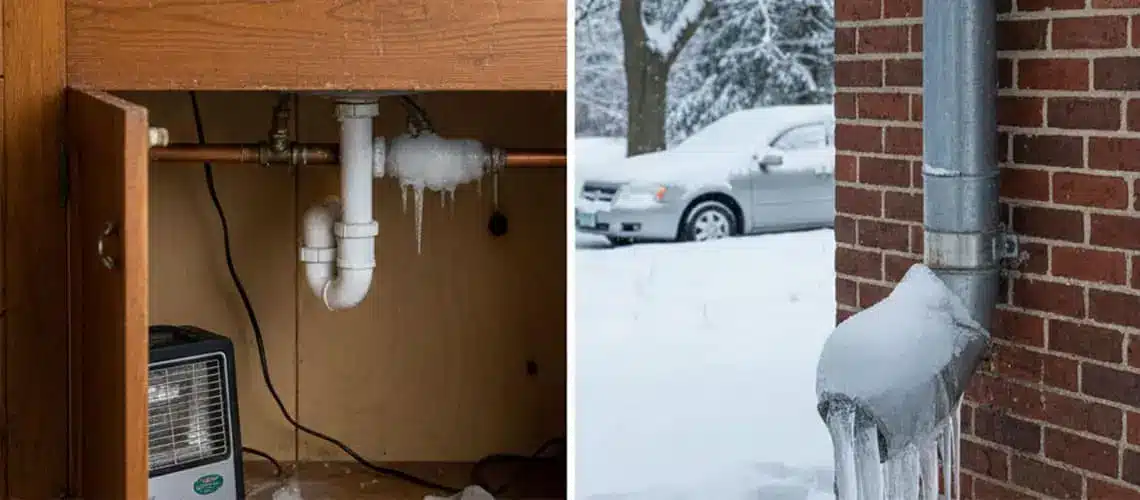
February in Maine and New Hampshire is calm on the surface but demanding on homes. Snow builds slowly. Temperatures stay below freezing for days at a time. Inside, everything can feel normal until small changes begin. A faucet slows. A pipe sounds different. A room feels damp without explanation. These are often the first signs of frozen pipes.
Many homeowners believe frozen pipes happen suddenly. In reality, pipes usually show warning signs during prolonged February cold. Homes across Maine and New Hampshire are especially vulnerable when freezing temperatures linger without daytime thawing.
Evergreen Air Quality Services helps homeowners understand what winter plumbing stress may leave behind through professional testing and clear, unbiased reporting.
Why February Creates the Highest Risk for Frozen Pipes in Maine and New Hampshire
February is the coldest and most consistent freezing month in the Northeast. Pipes remain cold for extended periods without relief. Water movement slows, internal pressure increases, and freezing becomes more likely.
Homes stay sealed to retain heat. Airflow drops. Pipes located near exterior walls, basements, crawl spaces, and garages remain exposed longer. This is why signs of frozen pipes appear more often in February than earlier in winter.
Even newer homes are not immune. Small insulation gaps or airflow restrictions around plumbing lines can create freezing conditions despite modern construction.
Slow or Reduced Water Flow
One of the earliest signs of frozen pipes is weak or inconsistent water flow. A sink may take longer to fill. A shower may lose pressure without explanation.
This occurs when ice begins forming inside the pipe. Water can still pass, but only partially. During February, cold in Maine and New Hampshire, this is rarely temporary and should not be ignored.
No Water From One Fixture
When one faucet stops working while others continue normally, it often signals a localized freeze. This is common in upstairs bathrooms, kitchen sinks near exterior walls, and basement plumbing lines.
This is one of the clearest signs of frozen pipes because it helps identify where freezing is occurring inside the structure.
Frosted or Extremely Cold Pipes
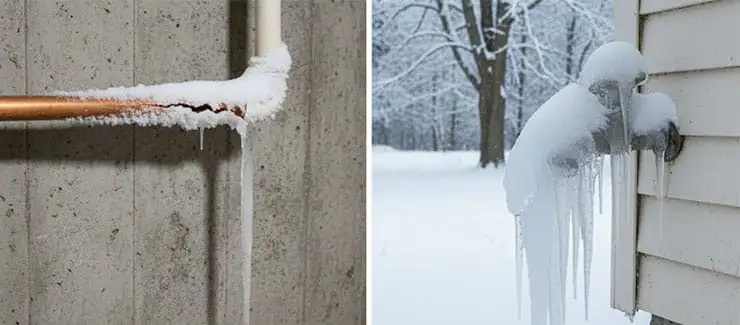
In basements and crawl spaces, exposed pipes may feel unusually cold or show frost along the exterior surface. This indicates internal ice formation is close.
February conditions in Maine and New Hampshire make this especially common in unfinished or partially heated areas.
Unusual Noises Inside Walls
Frozen pipes often make noise before damage occurs. Knocking, cracking, whistling, or gurgling sounds may appear when water is turned on or off.
These sounds occur as pressure builds around ice blockages. During February, these noises are common signs of frozen pipes forming behind walls.
Damp Areas Without a Clear Leak
Technical Insight: Interstitial Condensation
A frozen pipe can develop a hairline fracture and leak slowly as temperatures fluctuate. Moisture may appear in drywall, flooring, or insulation without visible water flow.
In Maine and New Hampshire homes, hidden moisture often appears as interstitial condensation. Even minor pipe damage can disrupt the vapor barrier inside wall cavities. When cold pipe surfaces meet warm indoor air, the dew point is reached inside the building envelope. This creates a localized microclimate where relative humidity exceeds 60 percent, the threshold for microbial growth, even when the room itself feels dry.
This is one of the most overlooked signs of frozen pipes and a common reason indoor air quality problems develop later in the season.
Why Frozen Pipes Can Lead to Indoor Air Quality Problems
Even when pipes do not burst, freezing can leave moisture behind. Wet insulation, damp wood framing, and soaked drywall often remain hidden through winter.
As temperatures rise, trapped moisture may contribute to odors, elevated humidity, and mold development. Recognizing signs of frozen pipes early helps prevent these secondary environmental issues.
Testing allows homeowners to understand whether the February freezing created conditions that warrant attention.
Homes Most Vulnerable in Maine and New Hampshire
Certain properties face a higher winter risk than others. These include older homes, seasonal properties, houses with unheated basements, and buildings with plumbing near exterior walls.
Across Maine and New Hampshire, many homes use older insulation materials such as cellulose or fiberglass, which can wick moisture and retain it for long periods. Tightly sealed homes common in the Northeast may lack sufficient structural ventilation. A small February freeze can later result in trapped moisture during the spring thaw, hidden behind drywall.
In these homes, signs of frozen pipes appear more often and last longer.
What Professional Testing Looks For After Freezing Events
Assessment Methodology
Evergreen Air Quality Services provides testing and reporting only. The focus is on understanding indoor conditions after winter stress, not selling repairs.
Our assessment methodology includes infrared thermography to identify thermal anomalies that suggest hidden moisture pockets. By mapping thermal bridges between exterior walls and plumbing lines, areas of elevated moisture risk can be located without invasive inspection.
This is supported by non-invasive moisture meters and calibrated hygrometers to create a data-driven moisture profile. When sampling is appropriate, air and surface samples are collected and analyzed by independent, accredited third-party laboratories.
Mold testing results are typically available within 48 hours. Bacteria and fungus testing results are delivered within a week, depending on laboratory processing. These environmental tests are not medical diagnostics.
When Homeowners Should Take Action
Testing should be considered when signs of frozen pipes appear or after known freezing events. Waiting until spring allows moisture conditions to remain hidden and harder to trace.
February is the right time to act while cold-related stress patterns are still present and identifiable.
What a Clear Testing Report Should Explain
A professional report should explain where concerns were identified, whether conditions appear typical or elevated, and which winter factors contributed.
Clear reporting allows homeowners to make informed decisions without fear, pressure, or confusion.
If you are noticing signs of frozen pipes in your Maine or New Hampshire home and want clear answers without sales pressure, Evergreen Air Quality Services provides professional testing you can trust.
Frequently Asked Questions
1. Can pipes freeze even if the home is heated
Yes. Pipes in unheated or poorly insulated areas can freeze even when living spaces feel warm.
2. Do frozen pipes always burst
No. Many pipes freeze and thaw without bursting, but still leave moisture behind.
3. Can frozen pipes affect indoor air quality
Yes. Moisture from freezing events can contribute to humidity and mold concerns.
4. How soon should testing be done after freezing
As soon as possible, especially if moisture, odors, or air quality changes appear.
5. Does Evergreen Air Quality Services repair pipes
No. Evergreen Air Quality Services provides testing and reporting only.
Final Call to Action
If you are noticing signs of frozen pipes in your Maine or New Hampshire home and want clear, unbiased answers, Evergreen Air Quality Services provides professional environmental testing you can rely on.
Call 207-310-7733 to schedule testing with Evergreen Air Quality Services.
