
Reviewed for accuracy by Lynn Campbell, CIEC, Certified Indoor Environmental Consultant.
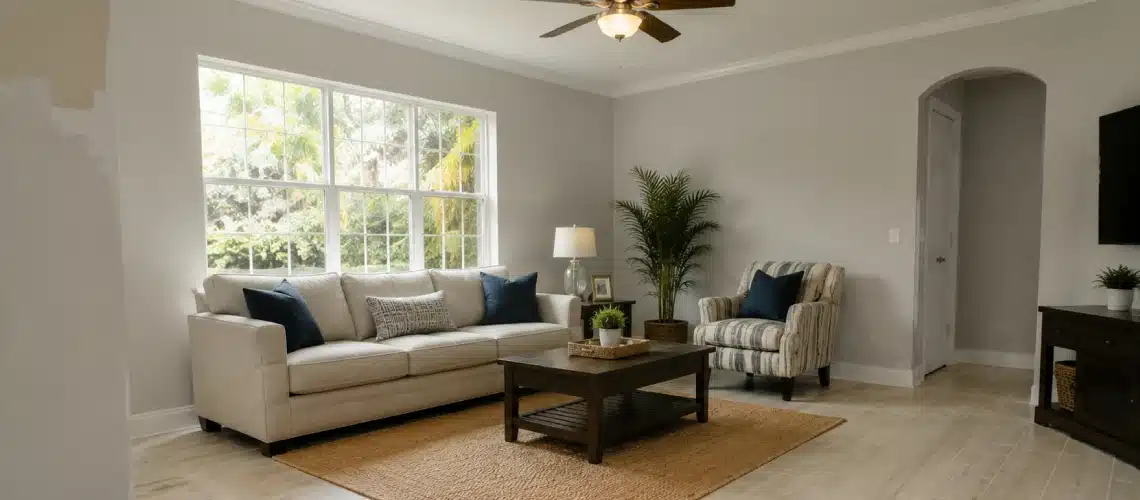
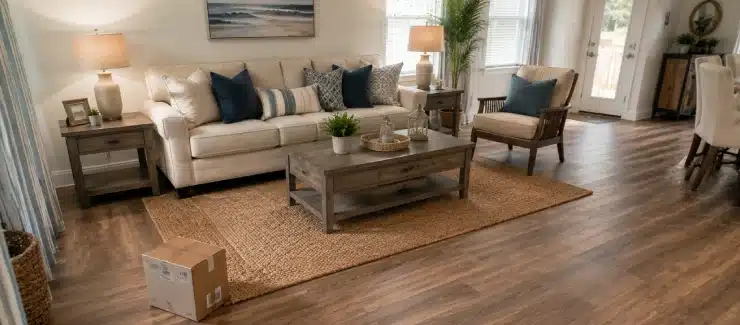
The room finally came together. New paint on the walls. New flooring installed last month. A new sofa delivered a couple weeks ago. Maybe some new cabinets or a bathroom vanity. The space looks great.
But when you walk in, something is off. A chemical smell lingers, especially after the room has been closed for a few hours. You have opened windows. You have run the AC. The smell has faded, but not disappeared. A few weeks in, you are starting to wonder if this is just how new stuff smells, or if something in that room is worth checking.
Not every “new material” odor calls for testing. Most fade over time with normal ventilation. But some do not, and understanding the difference helps you avoid two mistakes: worrying about something that will resolve on its own, or ignoring something that will not.
Quick Answer
New paint, flooring, cabinetry, and furniture can release airborne compounds known as VOCs after installation. Odor alone does not identify a compound or measure its concentration. If you notice a chemical smell after renovation in Florida, monitoring may be reasonable when the odor steadily decreases and no one is experiencing continuing indoor discomfort. Testing may be worth considering when the odor persists, returns after outdoor-air ventilation stops, or is accompanied by ongoing discomfort in the space.
Common Indoor VOC Sources
VOCs (volatile organic compounds) are chemicals that evaporate from materials at room temperature. U.S. EPA research found that levels of several common organic pollutants averaged two to five times higher indoors than outdoors, and elevated concentrations can persist after products containing organic chemicals are used.
Common indoor sources include:
Paint and coatings. Interior paint, primer, stain, varnish, and clear finishes release VOCs during application and for weeks after drying.
Flooring. Vinyl plank, laminate, engineered wood, carpet, and other flooring products can release compounds when new. Adhesives and other installation products can also contribute to indoor VOC levels.
Adhesives and sealants. Construction adhesives, caulks, and sealants used during renovation typically release VOCs during and after installation.
Cabinetry and pressed wood. Kitchen cabinets, bathroom vanities, and furniture made with pressed wood such as particleboard or MDF can release formaldehyde and other compounds over time.
Furniture. New sofas, mattresses, upholstered chairs, and pressed-wood dressers release compounds from foams, fabrics, adhesives, and finishes.
Cleaning products used during installation. Solvents used to clean surfaces during construction can linger in enclosed spaces after installers leave.
Not all of these release compounds at problematic levels. Levels vary widely based on the specific product, installation practices, ventilation during and after, and the specific room.
Why Florida Homes May Retain Indoor Odors
Florida’s climate can influence how homeowners ventilate indoor spaces after new materials are installed.
Many Florida homes rely heavily on air conditioning, which means windows may stay closed for long periods. In rooms with limited outdoor-air exchange—such as guest bedrooms, home offices, or walk-in closets—airborne compounds released by new materials may dissipate more slowly.
The amount and persistence of VOCs can vary based on the product, room size, temperature, ventilation, installation practices, and how much outdoor air enters the space.
This does not mean a Florida home will automatically have elevated VOC levels after renovation. It means ventilation conditions are one factor to consider when an odor persists.
When Monitoring and Ventilation May Be Reasonable
Monitoring means giving the room time and airflow, then watching how the odor changes. This is often the right first step. Monitoring may be reasonable when:
The odor is gradually decreasing week over week. Outdoor-air ventilation is being increased when weather, safety, and product instructions allow. Indoor air can be circulated as appropriate, but recirculating air alone should not be treated as fresh-air ventilation. The odor is not spreading to other rooms. No one in the household is experiencing continuing indoor discomfort associated with the space. The issue does not return significantly after the room is closed for a normal period.
There is no universal “safe after X days” period. Some materials off-gas for weeks. Others release compounds for months. The trajectory (getting better, staying the same, getting worse) matters more than the exact timeline.
When VOC or IAQ Testing May Be Worth Considering
Some situations warrant measurable information rather than continued observation. Testing may be worth considering when:
A strong chemical odor does not decrease over several weeks despite ventilation. The odor returns quickly whenever ventilation stops and the room is closed. Multiple rooms are affected, not just the renovated space. The materials or products used are unknown, unlabeled, or came from an unclear source. Anyone using the room repeatedly experiences headaches, eye or throat irritation, or other discomfort that fades when they leave the space. The renovation took place in a tightly enclosed area with limited ventilation options. There is uncertainty about whether the concern is VOC-related, moisture-related, or something else entirely.
Odor alone does not tell you which of these is happening. Appropriate testing can help distinguish between these possibilities.
What VOC Testing Can Clarify
VOC testing evaluates the areas sampled at the time of sampling. Depending on the specific test method and scope, results may clarify:
Whether measurable VOC activity is present in the sampled space. General airborne conditions in the room at the time of testing. How indoor conditions compare to outdoor baseline where applicable. Whether findings support further investigation of specific sources or additional sampling.
Testing has limits worth understanding. Depending on the method, VOC results may reflect total VOC levels rather than identifying every specific compound. A single sample represents a moment in time, and VOC levels can vary through the day based on temperature, ventilation, and activity in the space. Testing does not identify the exact source without follow-up investigation, and it does not replace product-specific research (checking SDS sheets, contacting manufacturers) when the source is unknown.
For more on what results may mean, what VOC levels may mean covers the interpretation side in detail.
VOC Testing Versus Mold Testing
These two categories address different concerns and are not interchangeable.
VOC testing evaluates airborne chemical compounds, typically from materials, products, or activities that release compounds into the air. Common triggers are renovations, new furniture, cleaning products, and off-gassing from stored items.
Mold testing evaluates mold-related conditions using air or surface sampling when appropriate. Common triggers include moisture events, humidity concerns, musty odors, and visible growth.
Odor alone does not identify which type of concern is present. A chemical-type odor may point toward recently introduced products or materials, while a musty odor may raise a moisture or microbial concern. Neither odor confirms a specific condition. Some situations overlap, so the testing scope should be based on the full pattern of concern rather than smell alone.
How Evergreen Can Help
Evergreen Air Quality Services provides independent VOC and indoor air quality testing for Central Florida homes. Testing scope and method are matched to the specific concern.
We test only. No remediation. No cleanup. No upsell.
Evergreen provides testing and reporting without selling remediation or cleanup services. This separation keeps the testing process focused on the conditions measured rather than on selling corrective work. If findings do not support further investigation, the report can say so.
Samples are submitted for laboratory analysis, and standard sample results are typically available within 24 to 48 hours, although turnaround can vary by test type, laboratory processing, and scope.
For related information, how building materials and indoor furnishings affect indoor air quality covers the source-side context in more detail.
Frequently Asked Questions
01. Can new paint or flooring release VOCs?
Yes. Paint, flooring, adhesives, sealants, and coatings can release VOCs during and after installation. The compounds and levels vary by product. Low- or zero-VOC labels can indicate reduced VOC content for some products, but they do not mean a product is completely emission-free.
02. Does a chemical smell mean the air is dangerous?
No. Odor alone does not measure concentration or health impact. Many odors related to new materials decrease over time. Persistent odor combined with continuing indoor discomfort may be a reason to gather measurable information rather than relying on smell alone.
03. How long can off-gassing continue?
It varies. Some products release compounds for days, while others may continue releasing them for weeks or longer. The rate depends on the material, temperature, ventilation, and how enclosed the space is. The direction of change over time matters more than a single universal timeline.
04. When may ventilation and monitoring be enough?
Ventilation and monitoring may be reasonable when the odor is steadily decreasing, no one is experiencing continuing indoor discomfort, and the odor is not spreading to other rooms. Increase outdoor-air ventilation when conditions and product instructions allow, and use indoor air circulation as appropriate.
05. What can VOC testing identify?
VOC testing evaluates airborne VOC activity in the sampled areas. Depending on the method used, results may reflect total VOC levels or identify specific compounds. Testing provides measurable data where observation cannot, but has limits, including the fact that a single sample represents a moment in time.
06. Is VOC testing the same as mold testing?
No. VOC testing evaluates airborne chemical compounds, while mold testing evaluates mold-related conditions using air or surface sampling when appropriate. The appropriate test should be selected from the full pattern of concern rather than from odor alone.
07. How long do laboratory results take?
Standard sample results are typically available within 24 to 48 hours, although turnaround can vary based on the specific test type, laboratory processing, and scope.
Schedule VOC & Indoor Air Quality Testing in Central Florida
If a chemical smell after renovation in Florida persists, returns after outdoor-air ventilation stops, or is accompanied by ongoing indoor discomfort, independent VOC or indoor air quality testing may help provide measurable information about the areas evaluated.
Call (407) 625-4458 or book online.
About the Reviewer
Lynn Campbell is a Certified Indoor Environmental Consultant serving Florida homeowners. Lynn specializes in indoor air quality testing, mold-related conditions, and environmental analysis for residential and commercial properties. Her work focuses on independent testing and reporting without remediation or cleanup services.
