
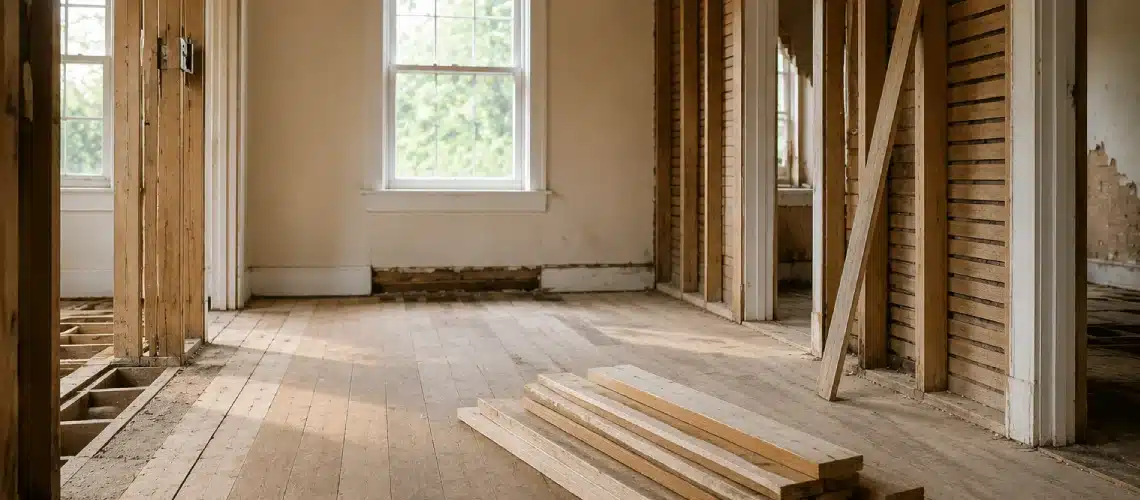
The project may look simple at first. Replace old flooring, open a wall, update a bathroom, or remove a ceiling material that has been there for decades. But in older Maine and New Hampshire homes, renovation often reveals something most homeowners do not expect: materials that were never tested or documented.
Most renovation plans begin with design choices and budgeting. At that stage, everything feels straightforward because the visible parts of the home look familiar and predictable. However, many older homes contain multiple layers of construction added over different decades, and those layers are not always clearly understood.
Once renovation work begins, the situation changes quickly. A material that has been untouched for years becomes a different concern the moment it is cut, sanded, drilled, scraped, or removed.
This is why asbestos testing before renovation becomes relevant, especially in older homes where material history is unknown.
Quick Answer
If the home is older and renovation will disturb flooring, ceiling materials, insulation, siding, plaster, adhesives, or other unknown materials, asbestos testing should be considered before work begins.
Testing confirms whether sampled materials contain asbestos before they are physically disturbed during renovation.
Why Renovation Changes the Risk
Asbestos concern is usually highest when suspect materials are disturbed, damaged, deteriorating, or handled during renovation. Materials that were stable for years can become a concern once they are cut, sanded, drilled, scraped, or removed.
Older homes often contain layered construction. New flooring may sit on older adhesives. Walls may have been repaired multiple times. Ceilings may have been covered instead of fully replaced. Because of this layering, it is not always possible to understand what is underneath visible surfaces.
Visual inspection alone is not enough. Testing and laboratory analysis are used to confirm material composition before renovation begins.

Common Renovation Projects That Raise Questions
Testing should be considered when:
– The home contains older materials or undocumented renovation layers
– Flooring, ceiling material, siding, insulation, plaster, or adhesives will be disturbed
– A contractor requests testing before work begins
– The project involves sanding, cutting, drilling, demolition, or removal
– The renovation affects older or previously modified sections of the home
Each project should be evaluated based on both material age and the level of disturbance planned.
Why This Matters in Maine and New Hampshire
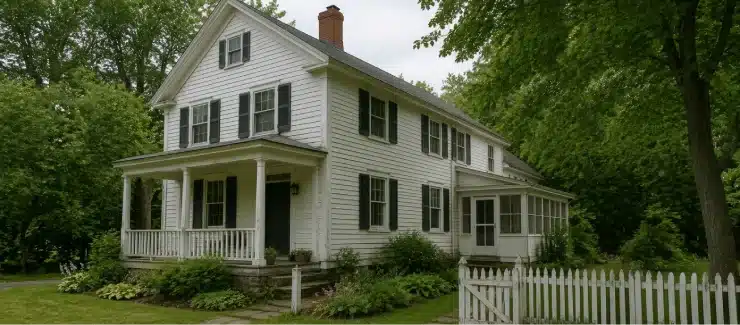
This is especially important because many homes, cottages, camps, and coastal properties have been renovated in layers over time rather than rebuilt completely.
A bathroom may have newer fixtures installed over older wall systems. A floor may have been replaced on top of older adhesive layers. A ceiling may have been covered or repaired instead of fully removed and rebuilt.
Seasonal renovation work increases activity during summer months, when homeowners often begin projects in older properties. Documentation of past materials is often limited or unavailable, which increases uncertainty before renovation.
When Testing Makes Sense
Testing becomes relevant when:
– Material history is unknown or undocumented
– A contractor requests testing before work begins
– Flooring, ceiling, siding, insulation, or plaster will be disturbed
– The project involves sanding, cutting, drilling, demolition, or removal
– Renovation involves older or previously modified sections of the home
Testing is most useful when uncertainty about materials exists alongside planned physical disturbance. It helps confirm material composition before work begins.
What Evergreen Does
Evergreen provides independent asbestos inspection and testing with laboratory-based analysis so homeowners can understand material composition before renovation work begins.
We test only. No asbestos removal. No remediation. No upsell.
Why This Matters
Pre-renovation testing reduces uncertainty before work begins in older homes.
Without testing, renovation may proceed without confirmed material information, which can lead to unexpected delays once work is underway.
Testing provides clarity for both homeowners and contractors by confirming material composition in advance. This supports safer planning and more predictable renovation timelines.
FAQ
1) Should I test for asbestos before renovating an older home?
Yes, when materials will be disturbed and their composition is unknown.
2) Can I tell if a material contains asbestos by looking at it?
No, visual identification is not reliable for confirmation.
3) What types of renovation projects may require asbestos testing?
Flooring removal, ceiling work, insulation replacement, siding removal, and demolition.
4) Does Evergreen remove asbestos if it is found?
No, Evergreen only provides testing and laboratory reporting.
5) How long do lab results take?
Typically 24 to 48 hours after laboratory processing.
6) Should contractors ask for asbestos testing before work?
Yes, in older homes where material history is unknown.
7) Is asbestos testing only needed for very old homes?
No, it depends on materials and whether they will be disturbed during renovation.
Final CTA
If you are planning renovation in an older Maine or New Hampshire home, testing before materials are disturbed can provide clarity before work begins.
Schedule asbestos testing in Maine or New Hampshire.
Certified lab results in 24 to 48 hours.
Call (207) 310-7733 or book online.
About the Reviewer
Angelo Quatrano is a certified indoor environmental consultant serving Maine and New Hampshire. He specializes in indoor air quality testing, asbestos inspection and testing, mold-related conditions, and environmental analysis for residential and commercial properties. He provides independent testing services only and does not perform remediation or removal work.
