
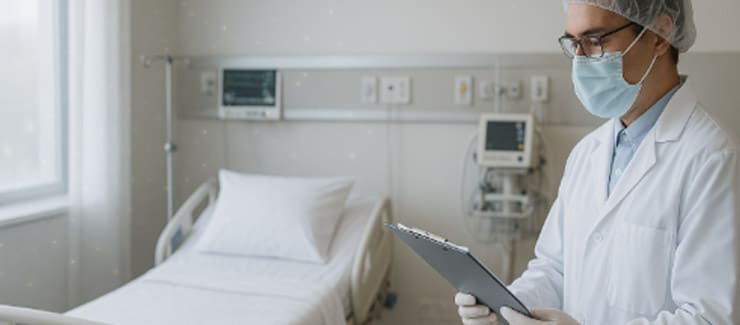
You walk into a hospital room. The bed is neatly made, the machines are sanitized, and the entire space looks spotless. But what if the air itself holds hidden bacteria that no one can see? For patients with weakened immune systems, those unseen particles can make recovery harder or even trigger new infections.
Clean surfaces are important, but they only tell part of the story. Healthcare facilities need more than appearance to protect patients. Bacterial sampling provides proof. With professional air quality testing, hospitals and clinics gain reliable data that safeguards patient health and supports compliance with inspection standards.
Why Healthcare Facilities Face Bacterial Risks
Hospitals, nursing homes, and clinics are high-risk environments. Every day, staff, patients, and visitors introduce new microbes. Some of the most serious risks come from:
-
Airborne bacteria moving through HVAC systems
-
Plumbing leaks or sewage events that spread coliform bacteria
-
Construction or renovation stirring up hidden contaminants
-
Constant patient turnover in shared spaces
The CDC estimates that 1 in 31 hospital patients has a healthcare-associated infection on any given day. Many of these infections are preventable with the right monitoring. Routine indoor air testing and bacterial sampling help facilities prepare for inspections, maintain compliance, and avoid costly penalties.
Why Standard Cleaning Isn’t Enough
Environmental services teams do a critical job keeping surfaces clean. But even a spotless room may carry bacteria in the air or on hidden surfaces. Traditional cleaning removes what is visible; Evergreen’s testing verifies what is invisible.
That is where air sample testing comes in. Evergreen Air Quality Services collects samples and sends them to accredited labs. The results show whether bacteria are present and in what levels. This service is not about performing cleaning or remediation. It is about delivering independent testing and reports that confirm safety after facilities complete their own sanitation or remediation.
How Bacterial Sampling Works
At Evergreen Air Quality Services, bacterial sampling follows a science-based process using specialized equipment and accredited laboratory analysis, giving healthcare administrators actionable results they can trust.
Our process includes:
-
Inspecting high-risk areas such as ICUs, waiting rooms, and surgical suites
-
Capturing airborne bacteria with a microbial air sampler for analysis
-
Collecting swab samples from surfaces to detect bacteria that may not be airborne
-
Submitting all samples to accredited laboratories for analysis of total coliform, fecal coliform, and E. coli
-
Delivering a clear, detailed report with results typically available within one week
These results help infection control teams understand contamination risks and take informed action. While general air quality tests look for mold or dust, bacterial sampling zeroes in on organisms that can cause bacterial infections in vulnerable patients.
Compliance and Liability: Why Testing Matters
Hospitals are under constant pressure to maintain compliance. Regulatory bodies like the Joint Commission, OSHA, and the CDC expect facilities to prove they provide safe environments. Bacterial sampling helps by:
-
Supplying documented evidence for inspections and audits
-
Reducing liability risks if patients or families raise concerns
-
Supporting insurance claims with independent lab data
-
Preventing costly penalties and reputational damage
📞 Call Evergreen Air Quality Services at 207-310-7733 today to schedule bacterial sampling and keep your facility compliant and safe.
The Benefits of Routine Bacterial Sampling
Healthcare leaders who invest in testing see multiple advantages:
-
Early detection of harmful bacteria
-
Protection against healthcare-associated bacterial infections
-
Stronger infection control backed by lab data
-
Confidence for patients, families, and staff
-
Reduced legal and financial risks
Paired with an air quality monitor, routine bacterial sampling provides administrators with documented insights for compliance, accreditation, and proactive risk reduction.
Why Choose Evergreen Air Quality Services
Evergreen Air Quality Services stands out as a trusted testing partner:
-
Over 20 years of experience in air quality testing and bacterial sampling
-
Independent services with no remediation — results you can trust
-
ACAC council-certified specialists with regional expertise in Florida, Maine, and New Hampshire
-
Fast turnaround times, with most bacterial sample results in about one week
-
Clear, actionable reports designed for healthcare compliance and inspection readiness
We focus solely on testing, reporting, and actionable insights. That independence means our recommendations are based only on evidence, not on selling cleanup services.
Do Not Overlook This Essential Step
Healthcare environments demand more than a clean appearance. Patients need proof that the air and surfaces around them are safe. Bacterial sampling provides the evidence healthcare administrators need to protect patients, reduce liability, and stay compliant with regulators.
📞 Call: 207-310-7733
📧 Email: info@evergreenairquality.com
🌐 Visit: evergreenairquality.com
Frequently Asked Questions
1. How is bacterial sampling different from general indoor air testing?
Bacterial sampling focuses on organisms such as coliform bacteria and E. coli, while general air quality testing may also detect mold, dust, and VOCs.
2. Can bacterial sampling results be used for compliance inspections?
Yes. Evergreen’s detailed reporting provides documentation that supports audits, accreditation, and insurance claims.
3. How quickly will I receive results?
Most bacterial sample testing results are available within one week of lab submission.
4. Does Evergreen Air Quality Services provide cleanup if bacteria is found?
No. Evergreen provides independent testing and reporting only, ensuring unbiased results with no conflict of interest.
5. Is bacterial testing necessary if we already conduct routine air quality tests?
Yes. General air quality tests may miss bacteria. Sampling adds precision by detecting pathogens linked directly to healthcare-associated bacterial infections.
