
Reviewed for accuracy by Angelo Quatrano, CIEC
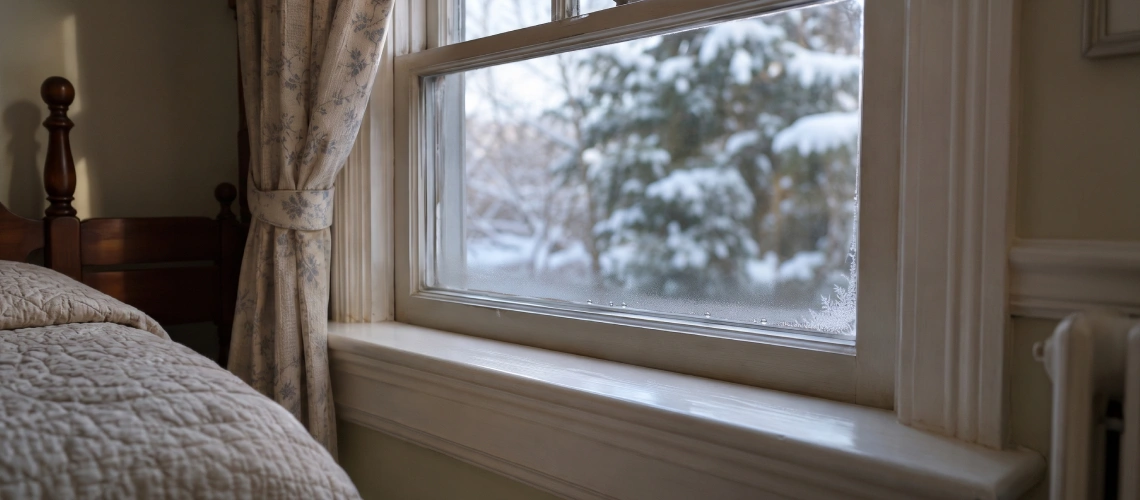
You wake up on a cold morning and the bedroom windows are wet along the bottom edge, or a thin layer of frost has formed on the inside of the glass. Wiping the windows dry is a routine in many Maine and New Hampshire homes, but it raises a fair question: is this ordinary winter behavior, or is it telling you something about moisture in the house?
Quick Answer
Window condensation in winter happens when warm, moist indoor air touches glass or frames that are much colder. It is common in cold climates and does not by itself mean a home has mold or an indoor air quality problem. It deserves closer attention when it is heavy, appears on many windows, keeps returning, or comes with a musty odor, staining, or peeling paint around windows. Testing is not needed for every foggy window. It may help when the pattern persists and you want measurable information about the areas evaluated.
This guide explains when condensation forms, why winter makes it more noticeable here, what you can track yourself, and where testing fits. It does not cover how to repair windows or correct moisture problems.
When Does Condensation Happen?
Air holds moisture as water vapor, and warm air can hold more of it than cold air. When indoor air meets a surface that is cold enough, some of that vapor turns into liquid water. In winter, the coldest surfaces in a home are often window glass, metal frames, and poorly insulated corners, so that is where moisture shows up first.
Moisture gets into indoor air every day from cooking, showers, drying laundry, humidifiers, houseplants, and breathing. When windows stay closed, that moisture has fewer ways to leave. For more background on how humidity and condensation relate, see Evergreen’s article on understanding condensation and humidity.
Why It Is More Noticeable in Maine and New Hampshire Winters
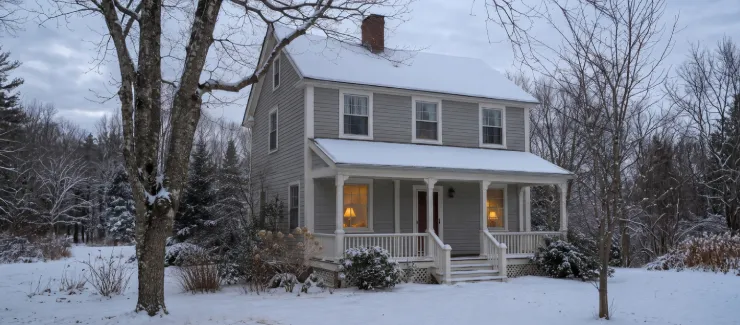
Long stretches of cold weather keep window surfaces cold for weeks at a time, and most households keep windows closed for the season. Older homes may have single-pane or older windows with colder glass, while newer, tighter homes can hold indoor moisture longer because less air leaks out. Moisture rising from a basement or crawlspace can add to indoor humidity in some homes. How much of each applies varies from one property to the next, so the same weather can produce very different results in two houses on the same street.
What Homeowners Can Monitor
A few simple observations show whether condensation is following an ordinary winter pattern:
- Whether it appears on one window or on many, and in which rooms.
- Whether it clears within an hour or two of the day warming up, or stays all day.
- Whether frost forms on the inside of the glass on the coldest mornings.
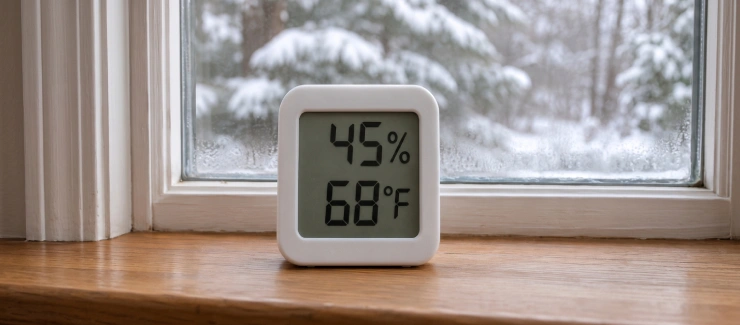
- Indoor humidity readings from an inexpensive digital hygrometer placed in a bedroom, a living area, and a lower level. The EPA advises keeping indoor humidity below 60 percent, ideally between 30 and 50 percent (EPA guide to mold, moisture and your home).
- Any musty odor, staining, bubbling or peeling paint, or darkened spots around window frames and ceiling corners.
- Whether condensation gets worse after showers, cooking, or when a humidifier runs.
These are observations, not measurements of what is in your air. They are useful for judging whether the pattern is settling or getting worse over the season.
When Monitoring May Be Reasonable
Monitoring is often a reasonable first step when condensation is light, clears during the day, appears mainly on the coldest days, and comes with no odor or staining. If hygrometer readings stay in a typical range and the pattern does not spread to new rooms, many homeowners simply keep watching through the season.
Monitoring has limits. It can show how the home behaves, but it cannot confirm whether moisture is present in places you cannot see, such as wall cavities, window framing, or the spaces below the home.
When Testing May Be Worth Considering
- Condensation is heavy or appears on many windows, and it keeps returning every day.
- A musty odor is noticeable in rooms with condensation, or near window frames and ceiling corners.
- Staining, peeling paint, or darkened areas appear near windows or on exterior walls.
- One room feels damper than the rest of the home.
- Condensation returns every winter, or other moisture signs exist in the basement or crawlspace.
- You want measurable information about indoor conditions rather than relying on how a room looks or smells.
None of these situations confirms mold. They are the points where monitoring alone may not answer the question you actually have. For broader guidance, see when to test indoor air quality in Maine and New Hampshire.
What Testing Can Clarify
Indoor air quality testing and mold testing evaluate the areas and samples included in the agreed scope. Depending on that scope, testing may provide measurable information about conditions in the rooms where condensation or odor was noticed, how those rooms compare with other parts of the home, and how indoor conditions compare with outdoor conditions where appropriate. The results are documented in a written report you can use when deciding on next steps.
What Testing Cannot Tell You
Testing describes the places and the time that were sampled. It does not evaluate every concealed space. It does not identify why a window is cold, how well it is sealed, or how a home is insulated or ventilated, and it does not diagnose health conditions. One sample does not represent the whole house.
When Another Professional May Be Needed
If condensation is linked to window performance, insulation, air sealing, ventilation, or a moisture source in the building, a window, insulation, HVAC, or building professional is the right person to evaluate it. Evergreen does not perform that work.
How Evergreen Can Help
Evergreen Air Quality Services provides independent indoor air quality testing and mold testing for homes in Maine and New Hampshire.
We test only. No remediation. No cleanup. No upsell.
Because Evergreen provides testing and reporting only, you receive findings that are not tied to selling window, insulation, or corrective work. Mold laboratory results are typically available within 24 to 48 hours. Some other analyses can take up to about seven days, depending on the test. You can read more about Evergreen’s Maine and New Hampshire service areas.
Frequently Asked Questions
1. Is window condensation in winter normal?
Often, yes. Warm indoor air meeting cold glass is a common winter occurrence in cold climates. What matters is the pattern: light condensation that clears during the day is different from heavy, constant moisture on many windows.
2. Does condensation on windows mean there is mold?
No. Condensation by itself does not confirm mold. Persistent moisture can support mold growth over time, which is why recurring condensation, odor, or staining is worth tracking.
3. What indoor humidity level should I aim for?
The EPA advises keeping indoor humidity below 60 percent, ideally between 30 and 50 percent. A digital hygrometer can show where your home sits.
4. Can window condensation affect indoor air quality?
Condensation is a sign of indoor moisture, not a measure of air quality. Ongoing excess moisture can contribute to conditions that support mold growth, so persistent patterns may be worth evaluating.
5. When should I consider testing instead of monitoring?
Testing becomes more relevant when condensation is heavy or recurring, when odor or staining appears, when one room differs from the rest, or when you want measurable information instead of relying on appearance.
6. Does Evergreen repair windows or reduce moisture?
No. Evergreen provides independent testing and reporting only. We do not perform remediation, cleanup, repairs, or any corrective work.
7. How long do laboratory results take?
Mold laboratory results are typically available within 24 to 48 hours. Some other analyses can take up to about seven days, depending on the test performed.
Call to Action
If condensation, odor, or staining continues in your Maine or New Hampshire home, contact Evergreen or call (207) 310-7733 to talk through a defined testing scope.