
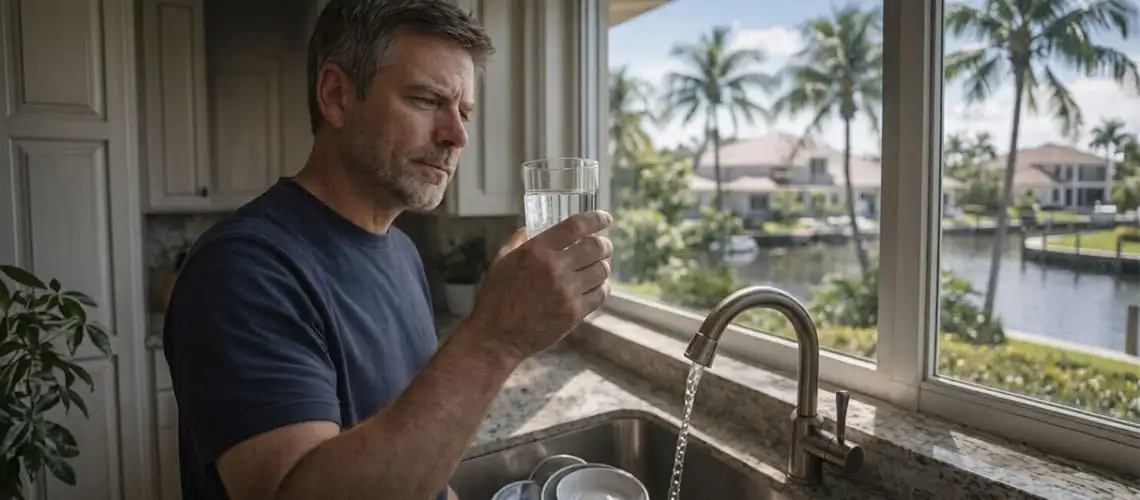
You turn the handle, and water comes flowing out. The water looks fine; it smells fine. But in Florida hydrogeology, water is not always fine, even when it looks and smells fine.
Contaminated water in Florida is a growing health concern in the state’s hydrogeology due to the shallow water table, the state’s porous rock, high rainfall, and aging water infrastructure in 2026.
At Evergreen Air Quality Services, we only provide independent water testing and sampling services. We don’t provide any cleanup services, water remediation, plumbing services, or water filtration systems. We provide water testing services to inform homeowners about the quality of their water, without any intention of selling anything.
1. What is Contaminated Water in Florida?
Contaminated water in Florida is water that contains contaminants at levels beyond the standards set by the Florida Department of Environmental Protection or the US EPA’s primary drinking water standards.
Laboratory tests measure contaminants to ensure they don’t exceed the Maximum Contaminant Level (MCL) set by the US EPA, the maximum amount of a contaminant permitted in drinking water before it becomes a health risk.
What causes contaminated water in Florida?
Contaminated water in Florida is water that is contaminated with bacteria, chemicals, or other pollutants from flooding, failing septic systems, agricultural runoff, industrial contamination, or old plumbing systems.
What contaminants will we test for in Florida water?
Microbiological Pathogens
Total Coliform Bacteria
E. coli Bacteria
Chemical Hazards
Nitrates from fertilizer runoff
Lead from old plumbing components
Volatile Organic Compounds
The 2026 Regulatory Focus: PFAS
Florida is continuing to increase its regulations over perfluoroalkyl substances, commonly referred to as PFAS, or “forever chemicals.” We are increasingly detecting these chemicals near industrial sites, airports, and fire training centers.
An accredited lab must analyze PFAS, which is not visually detectable. In 2026, testing private well water is becoming more prevalent for homeowners in Florida who live near areas that might be impacted by industrial activity, as this testing is crucial for identifying potential contamination from harmful chemicals like PFAS.
2. Why Florida’s Geography Increases Risk
Florida’s hydrogeology has created unique avenues for risk.
Shallow Water Table
Soil becomes saturated during heavy rain, which allows groundwater to rise toward the surface.
Karst Limestone Topography
The porous limestone structure allows fertilizers and pesticides to quickly enter groundwater, which has limited opportunity for natural filtration.
Hydrostatic Pressure
Prolonged rainfall in Central Florida can increase hydrostatic pressure on foundations, potentially allowing contaminated groundwater to pass through cracks and penetrations.
Saline Intrusion
In coastal areas, storm surges and over-pumping can cause saline intrusion, which can affect water quality and the integrity of plumbing structures.
Because of these environmental conditions, contaminated water in Florida is not always visually apparent through flooding. Migration routes can be underground and take longer.
The above environmental conditions have increased the risk to homeowners whose plumbing is affected by contaminated groundwater.
3. Health Risk Considerations
Exposure to contaminated water in Florida has the potential to increase health risks, which include the following:
-
Gastrointestinal distress
-
Nausea
-
Diarrhea
-
Skin irritation
-
Respiratory distress from aerosolized moisture
-
Fatigue
-
Headache
Water testing is used to obtain environmental information. It is not a medical diagnosis. But it is used to see if the contamination level requires action.
4. Independent Testing as a Safeguard
Florida environmental service regulations require a separation of assessment and correction work in some licensed disciplines. This is where an independent testing firm can provide a safeguard against potential conflicts of interest.
As a homeowner, working with a testing-only firm like Evergreen Air Quality Services provides the following benefits:
-
Unbiased laboratory data
-
Chain-of-custody documentation
-
Insurance or real estate transaction reports
-
Independent post-clearance verification
-
No financial incentive to sell remedial work
Water sampling is conducted using chain-of-custody documentation, while water testing is carried out by accredited laboratories using established testing methods, where applicable.
As a homeowner in Florida, you can rely on independent water testing services that provide unbiased testing, not product sales.
5. Florida Department of Health Guidance for Well Owners
The Florida Department of Health encourages routine testing of wells used for drinking water, particularly for bacterial contaminants. After flooding, owners should consider testing their wells, especially if flooding has caused water to rise into the well.
There is currently no mandate to require water testing in Florida, particularly when selling a home. Nevertheless, lenders and savvy buyers require documented laboratory results, especially when selling a home in a flood-prone area.
Routine water testing establishes a baseline, which enables the detection of contaminants before they exceed the maximum allowable level.
As a homeowner in Florida, scheduling a private well water testing service provides a clear picture of your water quality.
6. Signs You May Need Water Testing
Water contamination cannot be seen.
Signs of water contamination include:
-
Cloudy or discolored water
-
Metallic or unusual taste
-
Sewage odors near drains
-
Recent flooding or septic system backups
-
Submerged wellhead during storms
-
Unexplained gastrointestinal symptoms within the household
Even in the absence of apparent damage, the only way to verify is through laboratory sampling.
7. Long-Term Consequences of Ignoring Water Contamination
If contaminated water in Florida is left untested, the potential consequences include:
-
Ongoing bacterial exposure
-
Plumbing system degradation
-
Recurring gastrointestinal issues
-
Loss of property confidence during resale
-
Increased cost of correction
Florida’s tropical weather causes microbial growth to occur within 24 to 48 hours when moisture is present.
Early detection is essential in protecting health and property value.
8. When to Schedule Water Testing in Central Florida
If you experience any of the following, consider having your water independently tested through a laboratory:
-
Has your home been flooded or experienced storm surge?
-
Has your well been submerged?
-
Do you smell or see unusual odors in your water?
-
Are there unexplained gastrointestinal symptoms occurring within the household?
-
Are you purchasing or selling a property with a private well?
-
Is your home located near industrial sites, airports, or former fire training facilities?
Independent water testing is available through Evergreen Air Quality Services, a company homeowners in Central Florida trust for their water testing needs in Orlando and the Central Florida region.
We specialize exclusively in environmental testing services. We don’t provide remediation, plumbing, or filtration installation services.
If you need to have your water professionally tested through a laboratory, contact us at:
Evergreen Air Quality Services
Phone: 407-625-4458
https://evergreenairquality.com
Protecting Your Home Starts With Verified Data
Water contamination in Florida is often the result of minor issues rather than major disasters.
Contaminated water in Florida is often the result of minor issues rather than major disasters.
If your home is serviced by a private well, if your home has had flooding, or if your home is in a high-risk area, the results of independent lab testing can give you concrete evidence before a minor concern turns into a major problem.
Your safety starts with reliable environmental information.
Frequently Asked Questions
1. Can I get sick from water that is contaminated?
Yes. Depending on the contaminants in the water, exposure to them may cause gastrointestinal or skin-related problems.
2. Is clear water always safe to drink?
No. Coliform bacteria, E. coli, nitrates, or PFAS may still be in the water, even if the water is clear.
3. What is the definition of Maximum Contaminant Levels?
Maximum contaminant levels are the maximum allowable amounts of contaminants in drinking water that the Environmental Protection Agency sets under the federal Safe Drinking Water Act.
