
Many homes in Maine and New Hampshire feel solid, familiar, and safe. That is exactly why asbestos often catches people off guard. Asbestos was widely used for decades because it resisted heat, fire, and wear. The danger is not a dusty-looking surface; the danger begins when older materials are disturbed.
Cutting, sanding, drilling, or removing building materials can release asbestos fibers into the air. These fibers cannot be seen, smelled, or felt. Once airborne, they remain suspended and can be inhaled without warning.
This is why certified asbestos inspection in Maine and New Hampshire is a critical step before renovation, demolition, or repair work begins.
Evergreen Air Quality Services provides only independent asbestos inspection, sampling, and laboratory reporting. We do not perform removal or abatement. Our role is to help homeowners, buyers, landlords, and project managers identify Presumed Asbestos-Containing Materials (PACM), materials commonly known to contain asbestos unless laboratory testing proves otherwise, so decisions can be made safely and in compliance with state regulations.
Why Asbestos Still Matters in Maine and New Hampshire Properties
Maine and New Hampshire have some of the oldest housing stock in the Northeast. Many properties were built or renovated during periods when asbestos was a standard construction material.
Asbestos risk is not about age alone.
It is about disturbance.
Pre-renovation asbestos testing becomes especially important because:
-
Older homes often contain multiple renovation layers, even if rooms look modern
-
Seasonal cabins and inherited properties may have untouched original materials
-
Coastal and mill-era buildings frequently used durable asbestos products
-
Renovation work exposes materials that have been sealed for decades
Once disturbed, asbestos becomes a health, legal, and financial issue. Testing early prevents surprises later.
Building Science: Why Classification Matters
Asbestos-containing materials (ACM) are often hidden in places that look ordinary. Visual inspection alone cannot confirm their presence.
In Maine and New Hampshire, asbestos-containing materials are commonly classified by friability, how easily their fibers become airborne. Federal regulations further distinguish between Friable ACM, Category I non-friable ACM, and Category II non-friable ACM.
Friable (Higher-Risk) Materials
-
Thermal System Insulation (TSI) on boilers, pipes, and furnaces
-
Sprayed or troweled surfacing materials used for fireproofing or acoustics
-
Vermiculite attic insulation, which is loose-fill and behaves as a friable material when contaminated with asbestos
These materials can release fibers easily when disturbed.
Non-Friable Materials (Category I & II)
-
Vinyl-asbestos floor tile and backing
-
Black mastic and older flooring adhesives
-
Transite siding and cement panels
-
Roofing felts and exterior shingles
Non-friable materials generally become hazardous when cut, drilled, sanded, or broken during renovation.
This is why asbestos testing in ME & NH should never rely on guesswork.
Vermiculite: A Regional Risk in Maine and New Hampshire
Many Northeast homes contain vermiculite insulation, especially in attics. Over 70 percent of vermiculite sold in the United States between 1919 and 1990 came from the Libby Mine in Montana and was contaminated with amphibole asbestos.
Vermiculite insulation presents a risk because:
-
It is loose-fill
-
It behaves as a friable material when contaminated
-
Even small air currents can disturb fibers
-
It is highly susceptible to the stack effect.

How the Stack Effect Spreads Asbestos Fibers
As warm air rises and escapes through the roof during winter, it creates a vacuum inside the structure. This pressure difference can pull microscopic asbestos fibers from attic insulation down through light fixtures, plumbing penetrations, and wall cavities.
This can contaminate indoor air even if the attic is never entered.
For this reason, state and federal agencies recommend assuming vermiculite contains asbestos unless laboratory testing proves otherwise.
Compliance: Navigating Maine & New Hampshire Regulations
Asbestos inspection is not only a safety decision. In many cases, it is a legal requirement.
Maine Regulations (DEP Chapter 425)
-
A certified asbestos inspection is required before most renovation or demolition projects
-
Disturbing more than 3 square feet or 3 linear feet of regulated asbestos-containing material commonly triggers notification, handling, and disposal requirements
New Hampshire Regulations (NHDES Env-A 1800)
-
An asbestos inspection is required before renovation or demolition
-
Homeowner exemptions generally no longer apply once a contractor is engaged
-
If a contractor disturbs unidentified asbestos, the property owner may be held legally liable for cleanup costs, fines, and project delays
Professional asbestos inspection should occur before a hammer ever swings.
When to Schedule Asbestos Inspection
Testing should be scheduled before materials are disturbed. Common situations include:
-
Kitchen or bathroom renovations
-
Wall removal or ceiling replacement
-
Flooring replacement in older rooms
-
Basement finishing or mechanical upgrades
-
Buying or selling older properties
-
Preparing rental units for new tenants
Early inspection keeps projects predictable. Late discovery creates stress.
What the Inspection and Testing Process Includes
Asbestos inspection is structured, careful, and controlled.
A typical pre-renovation asbestos inspection includes:
-
A walkthrough focused on planned disturbance areas
-
Identification of Presumed Asbestos-Containing Materials (PACM)
-
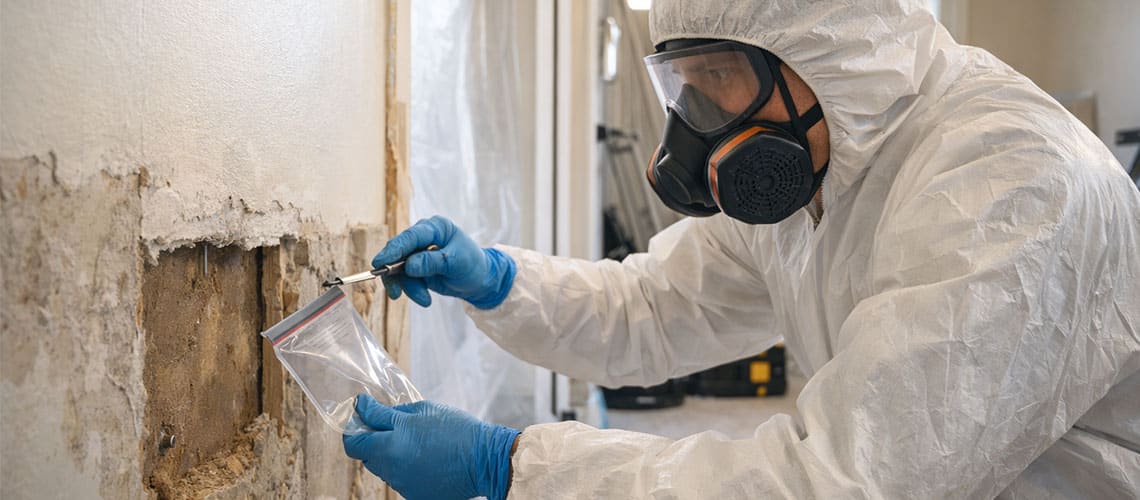
Safe, regulated sample collection
-
Laboratory analysis using Polarized Light Microscopy (PLM)
-
Transmission Electron Microscopy (TEM) is used for vermiculite and other materials where PLM may not be sufficient
-
A clear written report explaining results and next steps
All samples are analyzed by independent, AIHA-LAP-accredited laboratories, ensuring objective and defensible results.
Why Testing-Only Service Protects You
Some companies inspect materials and also offer removal. That overlap can influence recommendations.
Evergreen Air Quality Services provides inspection and documentation only. We do not remove asbestos or sell abatement services. This separation ensures:
-
Results are based solely on laboratory data
-
No pressure to approve unnecessary work
-
Reports accepted by contractors and municipalities
-
Clients remain in full control of decisions
How Early Testing Prevents Renovation Delays
Renovations move quickly once demolition begins. Discovering asbestos mid-project can halt work, delay permits, and disrupt contractors.
Early inspection helps:
-
Maintain schedules
-
Avoid stop-work orders
-
Prevent surprise costs
-
Keep projects compliant
Testing early replaces uncertainty with planning.
Frequently Asked Questions
1. Can asbestos be identified by sight?
No. Many asbestos-containing materials look identical to modern, non-asbestos products.
2. Do all older homes contain asbestos?
Not all, but many contain asbestos in certain materials or hidden layers.
3. Does Evergreen Air Quality Services remove asbestos?
No. We provide inspection, sampling, and reporting only.
4. When should inspection be scheduled?
Before renovations, before property transactions, or before disturbing older materials.
Asbestos is a hidden risk that only becomes dangerous when disturbed. Clear information before renovation protects your health, your project, and your timeline.
If you are planning work on an older property, asbestos inspection in Maine and New Hampshire through Evergreen Air Quality Services provides objective answers you can trust.
Phone: 207-310-7733
Address: 35 Main Street, Suite #1, Windham, ME 04081
Email: info@evergreenairquality.com
